Indice:
What to see in Wroclaw?
Wroclaw is a Polish city, the third largest in Poland, located in the southwest of the country, on the Oder River. Surrounded by canals, it is often called the Venice of the North.
Market Square

We’ll start with the Market Square. Not much to add when you see these beautiful buildings. The town hall, built in the 14th century, is particularly noteworthy, and here we’ll find the oldest brewery, which we visited in the evening and stayed for dinner.

The goblins of Wroclaw (Breslaw)
Some elves are waiting for us to tell us that in this city we will always walk looking down to find them.
You can explore the city by following the Gnome Trail. There are more than 300 small figures located at key points in the old town, representing different professions or even referencing the nearby building. If you pass by the old prison, you’ll find a gnome in shackles, or near the bank, you’ll find one withdrawing money from an ATM.

There’s even a map to help you find them all and have fun doing it with the kids; you can get it at the tourist office.
The goblins first appeared in Wrocław in 2005 and are a symbol of the peaceful anti-communist struggle initiated by the Orange Alternative movement in the 1980s. Back then, they painted figures on walls; today, they’ve become a symbol of the city.
As we’re used to, we had our first contact with the city through a free tour. It started to rain during the tour, but nothing stopped this tour, which was becoming more and more promising.
Solny Square

Just a few steps from the Market Square we find Plac Solny or Salt Square, a place, as its name suggests, where salt was traded.
The beauty of the colorful houses continues to impress us on this tour of what to see in Wroclaw.
Basilica of Saint Elizabeth
The number of churches you find during the walk makes you tempted to go into at least some of them to see their interiors, always magnificent, but I encourage you to visit two places that we recommend as essential, we continue the walk and now we go towards the first one
University of Wroclaw
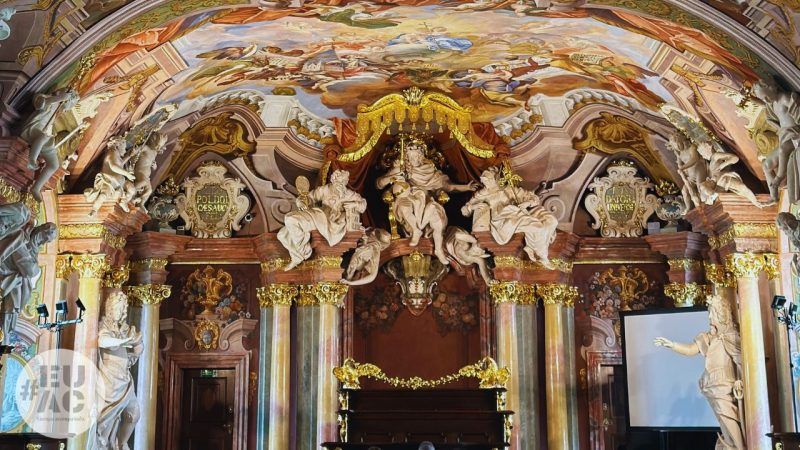
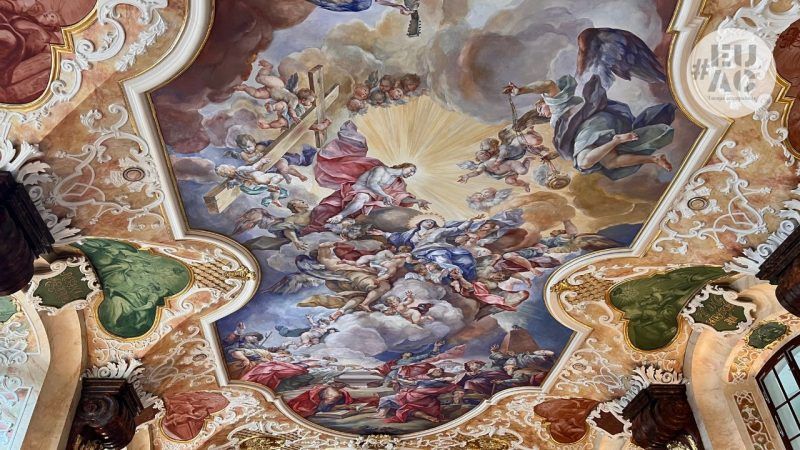
We headed to the University of Wroclaw, and with the help of a wonderful guide, we took this tour in Spanish and were amazed by this baroque building, something that I was hoping to see because I had already planned the trip, but it still left me speechless upon entering. Official website of the University of Wroclaw
The Leopoldina Hall, the largest and most representative part of the main building of the University, is a late Baroque monument and was erected in the years 1728-1732.
Highlights of this visit to the university include, as we mentioned, the Leopoldina Hall, which captured our attention, as well as the entrance to the Baroque Marian Oratory and the climb to the terrace, from which you can enjoy beautiful views of the city. As I mentioned, we had already booked the guided tour in Spanish, and it was well worth it.
Book a guided tour of the University of Wroclaw
The price of the common entrance is 12pln (3 euros), but they have a guided tour that lasts approximately an hour and a quarter, it is in Spanish and the entrance fee is 19 euros.
Cathedral Island

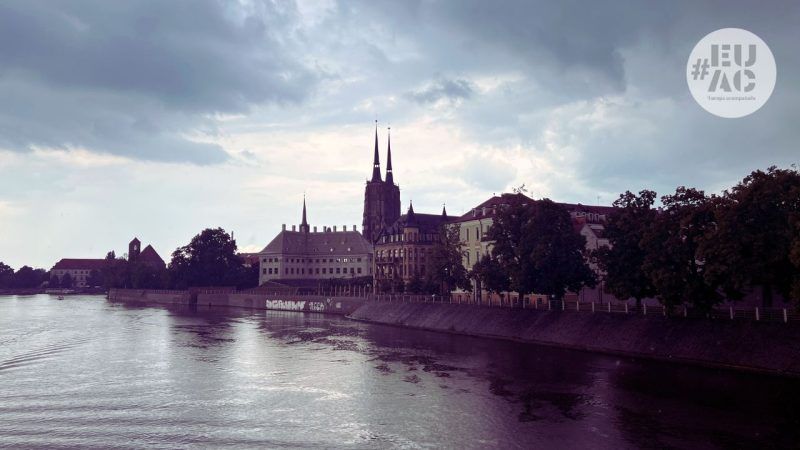
The Cathedral of St. John the Baptist and its island are the next stop, along with the Bridge of Love, a picturesque bridge covered in padlocks. The entire tour is a joy in itself. You can take a boat ride on the river. We didn’t because the weather was very changeable both days, with periods of significant rain, but nothing dampened our tour of Wroclaw.
The city revolves around the Öder River: the historic center is made up of twelve islands connected by 130 bridges, forming a landscape that, as we said, some have dubbed the Venice of the North. We may or may not agree with the nickname, but what we can say is that it’s one of the most beautiful cities in Poland, and given the number of beautiful cities in this country, that’s saying something.
Wrocław Market (Hala Targowa)
Before heading off to the other recommended visit, we’ll stop at the market. I personally really enjoy visiting markets, especially when you’re surrounded by locals shopping. The walk takes a slow pace, allowing you to enjoy the experience with all your senses.
Inside we found a milk bar, one of those we mentioned in other posts about Poland, which are restaurants with very cheap prices that appeared during the communist era in Poland, and which today remain more of a typical restaurant, although they are still used by locals. The prices are very reasonable and the food is very good.
That’s if you don’t expect luxury when you sit down to eat; you’ll buy at the counter, pay, and then find a table.
Panorama Raclawice
After regaining our energy, we headed to another place that, although we had planned to go, we didn’t imagine it would have such an impact on us: the Raclawice Panorama.
In our case, we had never seen a panoramic painting, so the impact was even greater, but I promise you it’s worth the visit.
But as soon as you arrive, you feel like you’re literally stepping into the painting, like you’ve become part of it. It’s impossible to describe the sensation with words.
Upon arrival, you’ll be given an audio guide in Spanish so you don’t miss any details of the work’s explanation. This 15-meter-high, 114-meter-long, eight-panel work depicts the Battle of Racławicka in 1794, in which the Poles defeated the Russians.
The painting has a long history. It was censored for a long period and not exhibited until 1985, when this space was built exclusively for its display.
The ticket price is 50 PLN (11 euros), and you can get it on the spot. When we went, they didn’t have a time slot available, so we got ours for the last minute that afternoon. However, you can also get it online at the Official website of Wroclaw Museums
Other places to see in Wroclaw

But… What else to see in Wroclaw?
During the tour, we’ll come across places like the old meat market, a place that was once used for meat sales, and which today is occupied by craft shops—a lovely spot to discover in Wroclaw.
Also the Hansel and Gretel houses, these two buildings connected by an arch are named after the characters in the tale published by the Brothers Grimm.
We will also stop by the curious Spanish bookstore.
Electric car ride around the city
We will continue the walk towards the Jewish quarter, where we find the White Stork Synagogue.
The White Stork Synagogue was built in 1829 and was the only synagogue in Wrocław to survive being burned down on Kristallnacht.
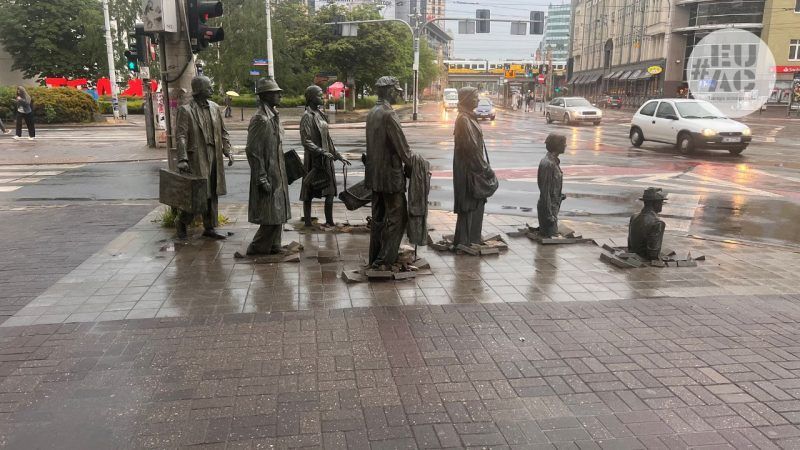
A little further away we find the sculpture Anonymous Passerby, where a group of people sink beneath the street to appear on the other side.
.
Neon Side Gallery
At night, it’s a great place to go, and I highly recommend the Neon Side gallery. A place full of vintage neon signs, where you’ll find some bars.
Thanks to a city resident who bought, repaired, and displayed these old signs, we can enjoy them.
If you read the Warsaw post you’ll remember that we went to a neon museum, where a series of signs were on display.
Map and video
NOTE: The information in this article is based on our own experience and is entirely objective. This article contains affiliate links.