What to see in Venice in two days. Today we invite you to join us on a two-day itinerary through Venice where, in addition to the essentials, we will also visit places where you will walk alone, we will go to Murano and Burano and we will tell you about accommodation and all the practical information.
Indice:
Day 1 in Venice
To start we decided to choose a tour that we did through and thanks to Civitatis. This included an introductory guided tour of the city + the Doge’s Palace and St. Mark’s Basilica.
This two-part tour helped us first get our bearings in Venice, with information that the guide, a Venetian with perfect Spanish, gave us in a pleasant way and answered questions we had about a city on the water that is so different from others.
Guided tour of Venice
Venice is located in the north-east of Italy, in the Veneto region, on a cluster of 118 small islands in the Venetian Lagoon. Its strategic location on the Adriatic Sea enabled it to become a prosperous commercial and cultural centre during the Middle Ages and the Renaissance.
Founded in the 5th century as a refuge from invasion, Venice grew to become the capital of the Venetian Republic, a powerful maritime state that dominated Mediterranean trade and politics. Today, it is known for its stunning architecture, artistic legacy and unique water transport system.
St. Mark’s Basilica
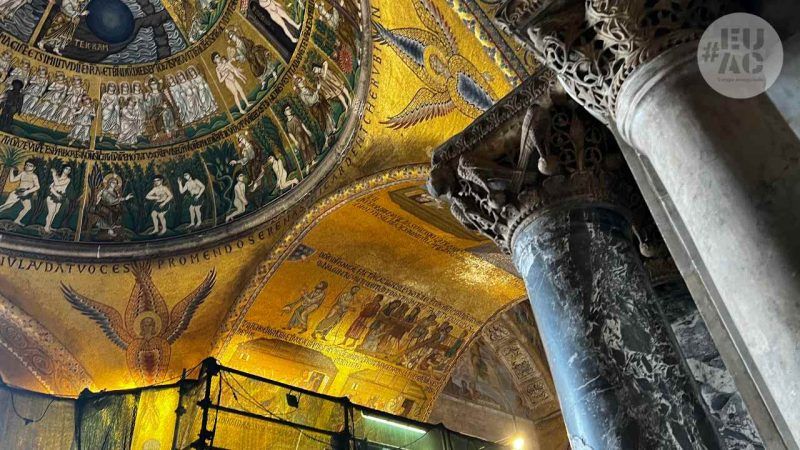
When we finished the walking tour we returned to the meeting point to wait for the guide who would accompany us first to St. Mark’s Basilica, a place that I don’t think I need to explain is a must-see, but it is crowded, or at least it was in September, and she tried at all times to find us time to stop and observe this magnificent construction in detail while she told us about its history and the meaning of the mosaics. When you reach the terrace you can have the beautiful views towards St. Mark’s Square and in the upper museum you can admire the real horse-drawn quadriga, the one brought from Constantinople.
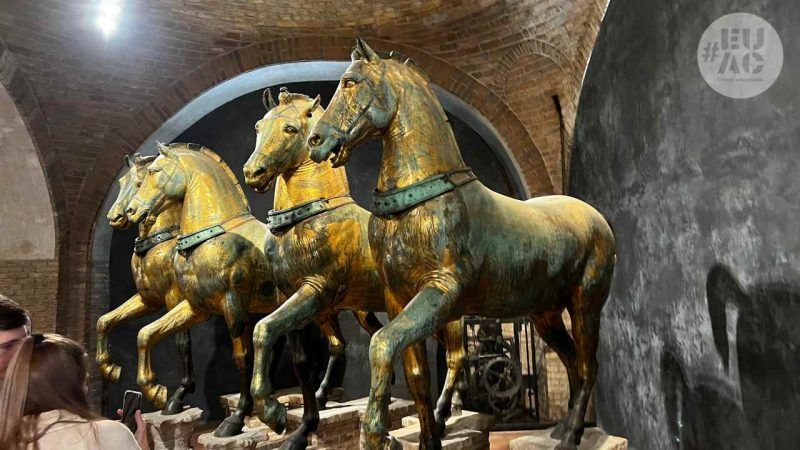
This famous sculpture, which originally consisted of a bronze quadriga (a chariot pulled by four horses), was taken by the Venetians during the Fourth Crusade in 1204, when they conquered the city. The horses were part of a sculptural ensemble that adorned the Hippodrome of Constantinople, an important centre of the Byzantine city.
After the sack of Constantinople, the Venetians brought the horses to Venice, where they were placed on the façade of St. Mark’s Basilica as a symbol of their power and victory. For centuries, the Quadriga remained there, but in 1797, when Napoleon invaded Venice, the horses were taken to Paris. After Napoleon’s fall, they were returned to Venice in 1815.
Today, the original horses, as we said, are here in the San Marco Museum, and bronze replicas are on the façade of the basilica, where they remain one of the most iconic symbols of the city.
Doge’s Palace of Venice
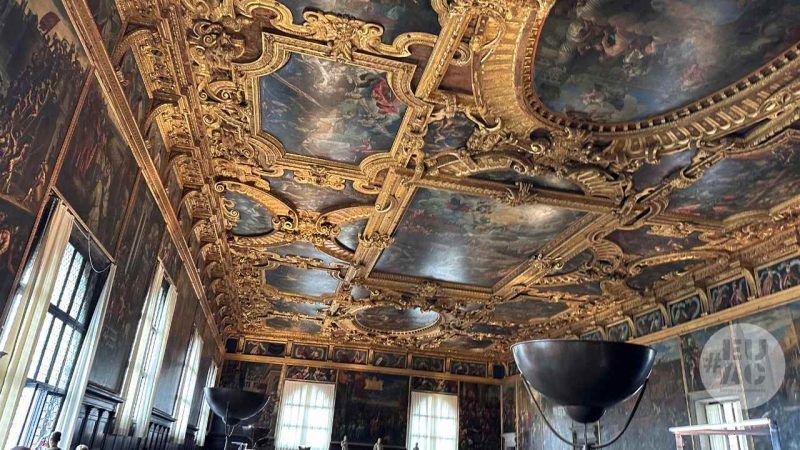
With our guide we would also now go to the Ducal Palace, a place we did not know and if you allow me to recommend it, go in. You will find large rooms, beautifully decorated, with paintings, and the Palace prison. I repeat, the guide accompanied us with information that we did not have, and having a guide in Spanish is a plus to remove those doubts that arise when going around, so it was worth doing it.
The Doge’s Palace in Venice (Palazzo Ducale) is one of the most iconic monuments in the city and an outstanding example of Venetian Gothic architecture. Located in St. Mark’s Square, it was the official residence of the Doge of Venice and the centre of political and judicial power of the Republic of Venice. Construction began in the 9th century, but the current design is the result of several renovations, mainly in the 14th century. The palace combines Gothic and Renaissance architectural elements, with its elegant façade of white and pink marble standing out.
The interior of the Doge’s Palace is equally impressive, with lavish decorations, monumental rooms and the famous Salon del Maggior Consiglio, where councils and assemblies of the Venetian government were held. It also houses the famous Porta dei Sighi, which connects to the old prisons and takes its name from the prisoners who crossed this gate before being sent to prison.
Today, the Doge’s Palace is a museum and one of Venice’s main tourist attractions, offering a unique insight into the city’s political and cultural history.
On your way out, don’t miss the cafeteria and a table that we didn’t want to wait for, but it’s a lovely little spot next to a canal.
At 9 in the morning we had started the tour, it was now a little after 13:00 and we already had a much clearer view of the city to start walking around on our own.
It is true that you can also take a free tour of Venice at the beginning and add the next day the visits to the Basilica and the Doge’s Palace.
If you plan to add Rome to your visit to Italy, don’t miss our post on What to see in Rome in 5 days
Bridge of Sighs and Church of La Pietà
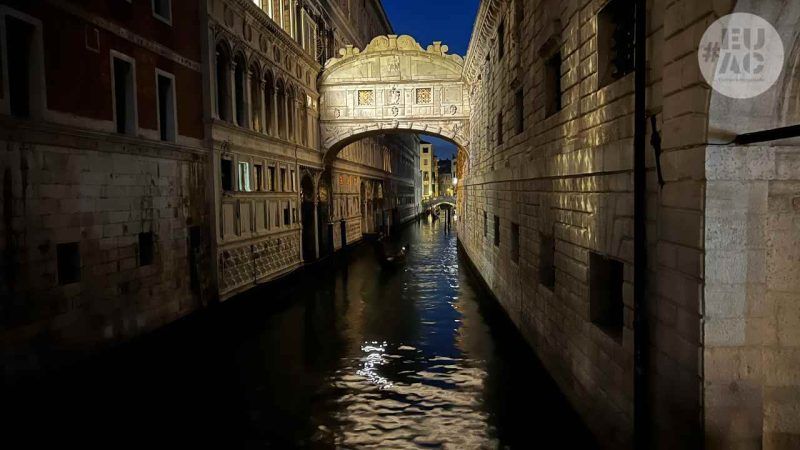
After admiring the Clock Tower in the square, seeing the Aqua Alta, and stopping for lunch, we will walk towards the pier and see the Bridge of Sighs from the outside, 300 meters more until we reach the Church of La Piedad, a place where concerts are offered on certain days. We were unable to get a ticket but we would have loved to have been able to attend. Vivaldi concert at the Church of La Pietà
Our steps will now take us to the Venice Arsenal.
Venice Arsenal
The Venetian Arsenal was the naval powerhouse of the Republic of Venice, where the ships that dominated the Mediterranean for centuries were built. This huge complex, a symbol of innovation and power, introduced mass production techniques in the Middle Ages, revolutionising shipbuilding.
We would come back here for one of the dinners, the place is quiet, away from the hustle and bustle of Piazza San Marco or the Rialto Bridge, walking through these little streets next to the canals both day and night is very special.
San Lorenzo Church
After the enjoyment we go to the Church of San Lorenzo, we walk almost 1 kilometer and we continue to discover that Venice is much more than people crammed into two or three emblematic places.
In the Castello district, in Campo San Lorenzo, we find the church of the same name, known for its unfinished façade. The current building was built at the end of the 16th century. San Lorenzo is known for being a space that mixes art and history.
Although it has long been desecrated, it has gained attention in recent years as a venue for contemporary art exhibitions, such as the “Ocean Space” installation we encountered during our visit.
We can also add that according to tradition, Marco Polo was buried in its cemetery, although there is no conclusive evidence of this. Its location, away from the tourist bustle, makes it a special corner for those curious about Venetian history and architecture.
Acqua Alta Bookcase
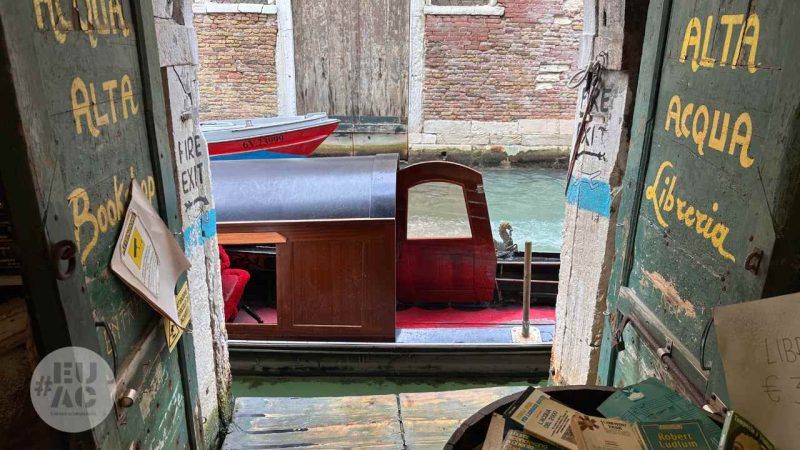
We are now going to a place that we always see on the networks and therefore we prepare for it to be busy, there are only about 350 meters between us and the Aqcua Alta Bookstore.
The Acqua Alta Bookstore in Venice is known for its uniqueness, with books stacked in bathtubs, gondolas, and other containers to protect them from flooding.
Luigi Frizzo, the founder of the Acqua Alta Bookshop, originally from Vicenza, opened the doors of this bookshop in 2004, with a very different vision from traditional bookshops.
The idea of stacking books in gondolas, tubs and other water-resistant containers emerged as a practical yet ingenious solution to the constant challenge of acqua alta (high tides that flood the city). Rather than seeing flooding as an insurmountable problem, Frizzo decided to incorporate it into the design of his bookstore, turning Venice’s vulnerability into a distinctive element. Thus, the bookstore not only protects the books from water, but also pays homage to the city’s unique nature.
Admission is free, at certain times there is a queue to enter and once inside you follow a path for the tour which is very crowded, but I think it is a picturesque place to visit.
Our steps get lost between the canals, stopping at the bridges, magic appears in all of them.
We arrive just a few steps to a beautiful photo, the Palazzo Tetta, the building surrounded by water on three of its sides.
Rialto Bridge
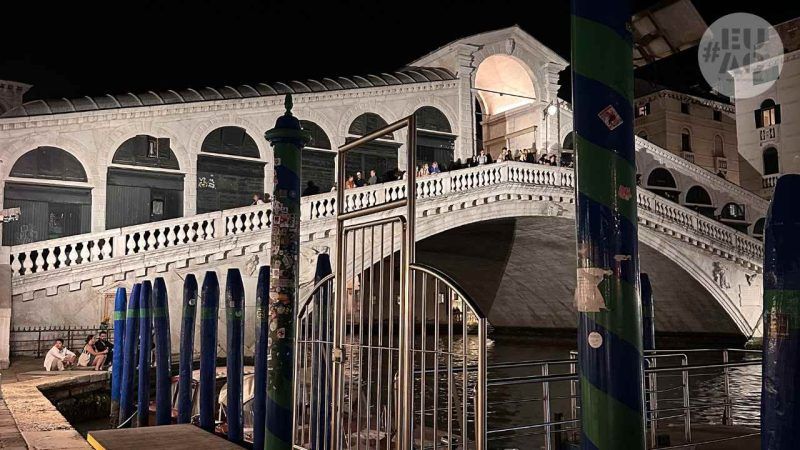
We head to one of the most emblematic places in Venice, the Rialto Bridge.
The Rialto Bridge (Ponte di Rialto) is one of the four bridges that cross the Grand Canal in Venice and, without a doubt, the most famous. Its history dates back to the 12th century, when there was a wooden bridge at this location to connect the districts of San Polo and San Marco, the latter of which we were walking across today.
Along the bridge are rows of shops selling everything from jewellery and Murano glass to tourist souvenirs. This turns the bridge into a lively floating shopping mall.
The Rialto Bridge is not only a symbol of Venice, but it was also, for centuries, the economic heart of the city. It is located near the Rialto Market, a historic place where Venetians bought fresh fish, fruit and vegetables, a tradition that is still alive today.
I’m showing you just some of everything you can see in Venice since you have a lot, also taking a free tour of the city can be a good idea to situate yourself in it.
If you are planning to visit Naples, don’t miss our Complete Guide to Naples
Church of San Giacomo of Rialto
If we cross the bridge, which we will do without hesitation, we can reach the Church of San Giacomo di Rialto. Founded in 421, San Giacomo di Rialto is traditionally considered the oldest church in Venice.
But we will cross again because a wonderful viewpoint awaits us and.. free!
Viewpoint of the Fondaco dei Tedeschi
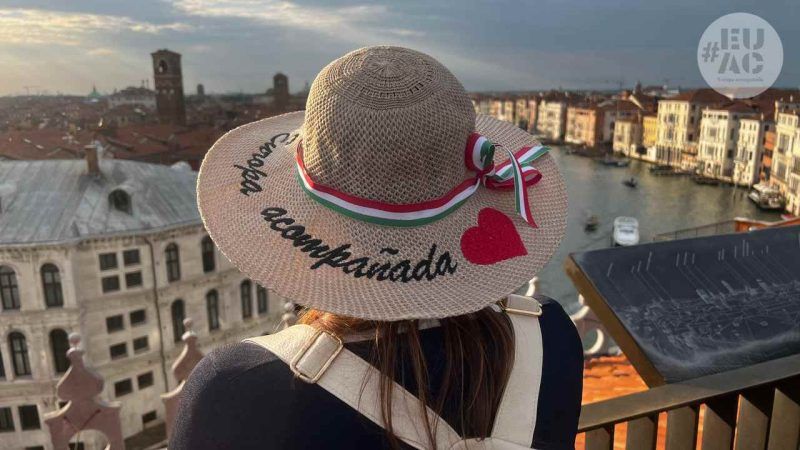
The Fondaco dei Tedeschi Viewpoint. Attention here, the viewpoint is free but it is necessary to book and the places sell out very quickly.
Attention! The calendar for reservations will be available 21 days before you want to visit, so make a note of it and go there that day because the places will fill up in minutes. Once you arrive at the place on your schedule, you have 15 minutes to stay on the terrace, but I promise you that the views are well worth it in my opinion.
Website to book the viewpoint of the Fondaco dei Tedeschi
The schedule is from 10 a.m. to 6 p.m.
We will begin to return on this day, since we had a flourish to add to these views.
Palazzo Contarini del Bovolo and Teatro de la Fenice
We will first pass by the Palazzo Contarini del Bovolo, The palace dates from the fifteenth century, built by the Contarini family, it has a striking spiral staircase attached to the façade. You can climb the stairs and get the views from there apart from enjoying this construction, although we didn’t, the entrance fee is €8.
The walk takes us to the Fenice Theater. This theatre is considered one of the most famous opera houses because many of the most well-known Italian operas have been premiered there. It can also be visited on an audio-guided tour, the entrance fee is €12. We didn’t do it like the previous one due to a matter of time, but I was sorry not to enter, it will be for the next one.
Gondola ride
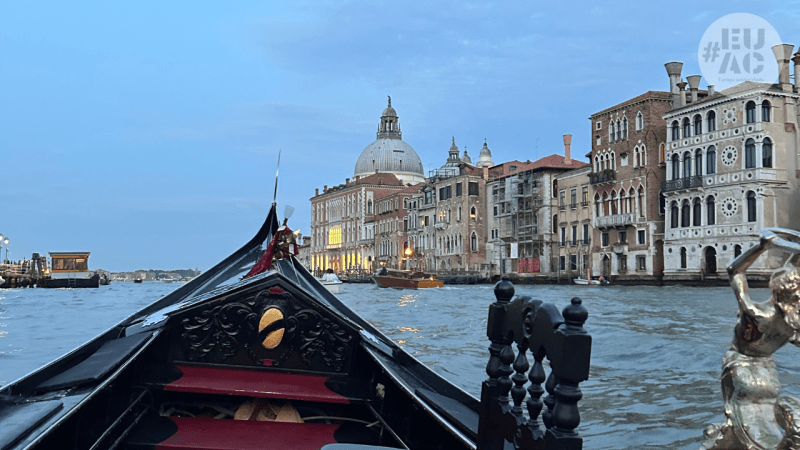
And today we will have a typical Venice closing, the gondola ride through Venice
The gondolier was very friendly, the tour was beautiful, I have already mentioned this in other videos, the first time we did it on another trip we thought it would not be worth it because of the cost of the experience and it was quite the opposite, we thought it was spectacular and a must see in Venice, so this time we had no doubts about choosing to do the ride again.
Day 2 in Venice
Today we wake up very early to visit two of the other islands, Murano and Burano.
We will take the vaporetto that goes to Burano, with the same three-day pass that we had we were able to make the journey.
Burano
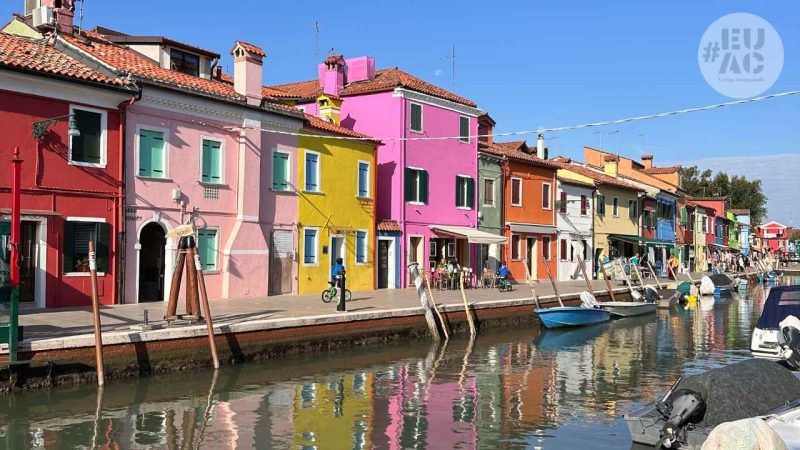
We would go first to Burano, the one that is furthest away, and the one that many seek to portray for its colorful houses, so as we wanted to be able to bring you some nice shots of the city we chose to go before it was too crowded.
It was a success, because beyond the takes, and leaving that aside, we were able to enjoy it in a very calm way.
The small cafes were just opening and our breakfast was on small tables over the canal, with some delicious bites really while we enjoyed a sunny day.
One of the most famous features of Burano is its houses painted in vibrant colors. According to tradition, fishermen painted their houses in bright colors to be easily recognized from the sea, especially on foggy days. Currently, the colors are regulated, and homeowners must apply to the government for permission to repaint them. The bell tower of the church of San Martino, known for being visibly leaning, is another point of interest.
Unlike Venice, Burano has a more relaxed pace of life. A walk around the island allows you to enjoy the calm of the lagoon, far from the tourist bustle. The narrow streets, small canals and flower gardens are ideal for those looking for a more intimate experience, but as I said, take advantage of the morning so that this magic is not cut short.
This is a walk that I recommend you to do. From the Fondamente Nove pier in Venice you have the vaporetto 12 direct and it takes about 45 minutes, the 75-minute ticket costs €9.5 but if you are going to stay more than one day it is convenient to pass for days, €25 for 24 hours. Although you can also do it on a tour together with Murano.
Murano
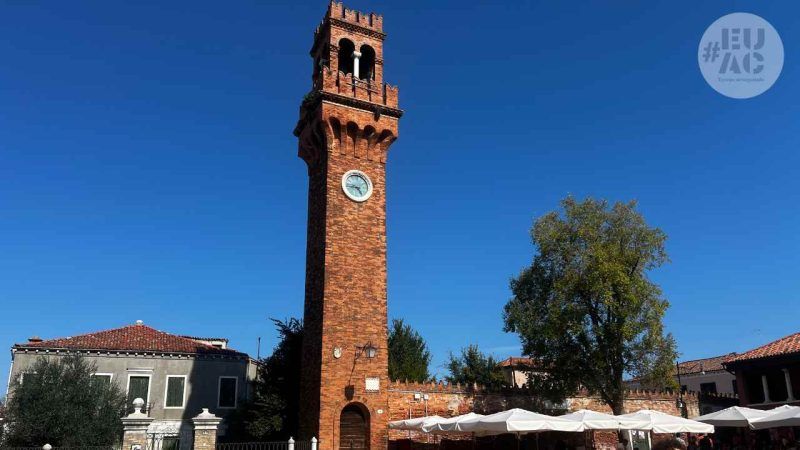
It was time to get to Murano. We return to the vaporetto, from Burano it takes about 20 minutes. Murano is located approximately 1 kilometer from the city of Venice and is famous for its glass craftsmanship, particularly for its lamps, glasses, goblets and ornaments.
Getting off in Murano is like seeing a small Venice, much more similar to this one than to Burano. It looked very lively and walking through its streets also has a lot of charm.
A visit to a glass factory or the glass museum are a must in Murano. As you walk through its streets along the canal, you will see the number of shops revolving around the glass. Wonderful. The lighthouse and the Basilica of Santa Maria and San Donato cannot be missed on this tour, as well as taking a break to continue planning the day.
This tour is also worthwhile. I think that including both is a good option on a visit to Venice, but it will depend on the time you have on the island. As I told you at the beginning, we spent one night in Mestre to be able to get off early and then two nights in Venice, so we had two full days on the island.
It was time to return to Venice on the vaporetto and go visit more places that we still had pending and end up with wonderful views of the city.
Jewish Ghetto of Venice
As we said we wanted to visit other places in Venice and so we went to the Canareggio neighborhood, and in it to the old Jewish ghetto of Venice
Beginning in 1516, the Catholic Church created in the Republic of Venice, regulations on Jews forcing them to live in an area of the city where the foundries located in antiquity, known in Venice as “geti”, as well as to carry identification and manage pawnshops in the city at prices set by the Republic of Venice.
Here, away from the hustle and bustle of tourists, you can experience a more authentic Venice, far from the poses for Instagram.
Barefoot Bridge and Constitution Bridge
We continue walking and we get close to the hustle and bustle, between bridges, different languages that we hear during the walk, in just over 600 meters we arrive at the Puente de los Descalzos, very close to the Santa Lucía train station, a place that many of you will surely arrive at.
A rest stop and to study the map.
A few more steps the Calatrava bridge, the Constitution bridge, and we will walk to immerse ourselves in Dorsoduro.
Dorsoduro
Dorsoduro is one of the 6 neighborhoods, the sestiere of Venice. Here we find the Palazzo Ca Rezzonico and museums such as the Peggy Gughenheim or the Accademia Gallery.
Santa Maria della Salutte
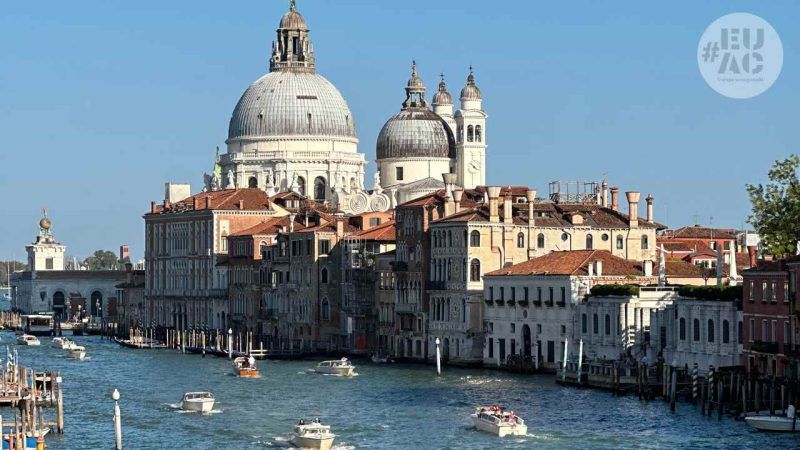
This hike has been longer, about 2 kilometers but in a few more steps we will reach the beautiful and iconic Santa Maria della Salutte
Its construction began in 1631. The basilica was erected to celebrate the end of the plague that wiped out much of the population of the Veneto Region. Its dome is the postcard of Venice, isn’t it?
Admission is free
Returning we have two options, take the vaporeto to see the Basilica of San Giorgio Maggiore or …. the one we choose
Campanile San Marco
End the day with the climb to the Campanile in Piazza San Marco, with wonderful views.
It is another of the places that I recommend, the ascent is by elevator and having your ticket already avoids the long queue.
Admission at the ticket office there costs €10. To avoid the queue, we take the climb to the Campanile + a sample of Venice in virtual reality.
Help, discounts and map of Venice
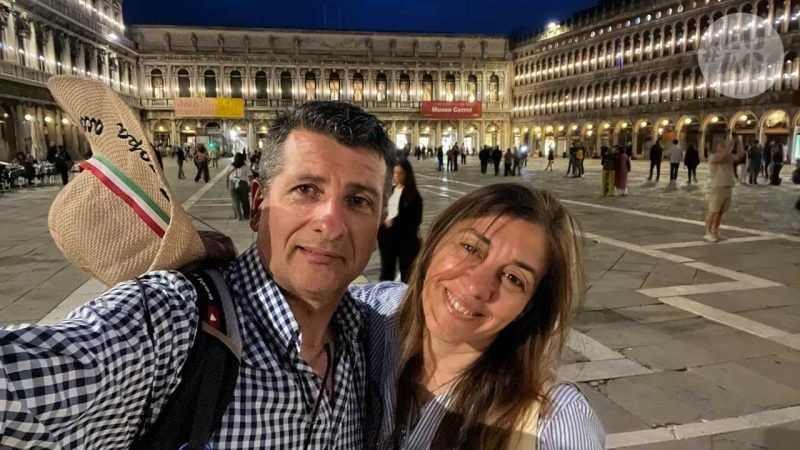
Throughout our tour we were connected with Holafly’s eSims both to guide us between the dots and to share the moments through the networks. I leave you a discount coupon. EUROPAACOMPANADA5
We went with travel insurance, since you can never miss one, ours was Iati, booking from here you have a 5% discount on your Iati insurance.
As I was saying, you can get the tickets for the vaporetto one by one, as you need, but if you are going to move several times, it is better to get one of 24 hours or more,
We had to take a taxi on the first day due to a transport stoppage, it is very expensive, the journey from Troncheto to Rialto cost €80
Suitcases try to carry only the carry ons, because it is difficult to move with large suitcases.
Accommodation. Here I tell you that you have the option of staying before arriving on the island, do it in Mestre and travel during the day to it or stay within Venice, although the difference in prices is quite a lot, we prefer to do it within the island, but evaluate the options.
The first night of the three we stayed near Mestre (Malcontenta) Hotel Palladio, the small and somewhat outdated room but fulfills the purpose of just sleeping, you have parking included outdoors in the hotel. In front of you you have the stop where the bus that takes you to Venice passes.
The other two nights we did it in an apartment near Piazza San Marco. Apartments Manin. Very convenient location to move around, spacious, check in is contactless, no breakfast or reception.
We had dinners one night near the Arsenal, and the other night near the Rialto Bridge.
We went by car, we left the car in the Tronchetto car park, the cost per day is € 27
You can get to the city by plane to Marco Polo Airport, by train to the Santa Lucia station we saw on the tour, or by bus to Piazzale Roma near the city center.
Entrance fees to Venice
The Access Fee is the fee set by the Municipality of Venice that occasional visitors must pay, on some specific days in 2025, in order to gain access to the ancient city of Venice.
Venice itinerary map
Venice Video
NOTE: The information in this article is based on our own experience, being totally objective. This article contains affiliate links.