Indice:
Introduction: Discovering Pompeii
Traveling to Pompeii is like stepping back in time. This ancient Roman city, buried by the eruption of Mount Vesuvius in 79 AD, is one of the most fascinating archaeological wonders in the world. Its incredible state of preservation allows visitors to explore streets, houses and squares that seem frozen in time. If you’re planning your visit, here is a complete guide to make the most of this unique historical experience.
How to Get to Pompeii? Options for Every Traveler
There are several ways to get to Pompeii depending on your starting point:
From Naples or Rome
- By train: From Naples, take the Circumvesuviana train line towards Sorrento and get off at Pompei Scavi – Villa dei Misteri station. The journey takes about 30–40 minutes.
- By bus: Several companies offer services from Rome and Naples to Pompeii.
By car: Flexibility and convenience
We chose this option since we were traveling by car. This allowed us to plan our itinerary without being tied to public transport schedules. There are several parking lots near the main entrances—though some can be a bit pricey—so it is worth looking into options before you arrive.
Book a car for your trip through Italy

Tickets and rates: Plan your visit hassle-free
The easiest way to manage your tickets is by using tourist passes like the Campania Pass. We used it, and it was an excellent decision: it includes admission not only to Pompeii but also to other sites like Herculaneum and Mount Vesuvius, as well as public transport in the region.
If you prefer individual tickets, they can be purchased online or directly at the box office, although buying them in advance during peak season is recommended to avoid long lines. Pompeii official website
If you want a hassle-free visit, a Spanish-language tour from Naples to Pompeii is an excellent idea, as is a Spanish-language tour from Rome to Pompeii.
When Is the Best Time to Visit Pompeii?
Planning the timing of your visit can make all the difference to your experience.
- In the afternoon: We decided to visit Pompeii at this time of day, and it turned out to be an excellent idea. Mornings tend to be busier, with more tourists and group tours. In the afternoon, however, the crowds thin out, which allowed us to explore at a relaxed pace and take better photos.
- Very early in the morning: Another option is to arrive right when it opens and get slightly ahead of the tour groups.
- Low season: From November to March you will find fewer tourists and cooler weather. In summer, temperatures can be intense, so bring water and protect yourself from the sun.
What to See in Pompeii: A Must-Do Route

Pompeii is full of archaeological treasures you cannot miss:
- The Forum: The political and social heart of the city. Here you can see the ruins of temples and administrative buildings.
- The House of the Faun: One of the most luxurious residences in Pompeii, famous for its mosaics.
- The Amphitheater: Perfectly preserved, it is the oldest in the Roman Empire.
- Frescoes and graffiti: The paintings and inscriptions on the walls offer a glimpse into the daily life of the people of Pompeii.
We recommend bringing a map or using a mobile app to guide you through the main highlights, as there are quite a few of them.
Combine Your Visit: Herculaneum, Vesuvius and More

If you are in the region, you cannot miss other nearby places. We complemented our visit to Pompeii with a trip to Vesuvius and Herculaneum.
- Herculaneum: Smaller but just as impressive, this archaeological site offers a different perspective on Roman life.
- Vesuvius: Climbing up to the crater of the volcano that buried these cities is a unique experience. You can get there by car or bus and walk the last stretch.
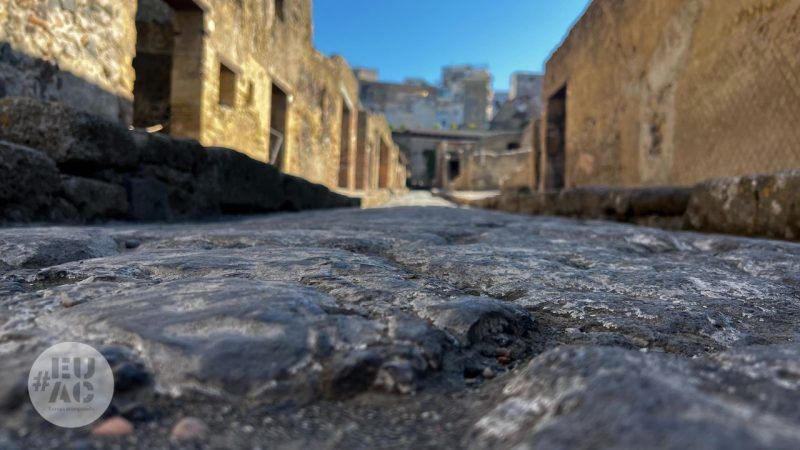
Set aside at least one full day if you plan to do all three visits, or split them over two days for a more relaxed experience.
Transport from Herculaneum to Vesuvius
You can do a Pompeii, Herculaneum and Vesuvius tour in a single day, but if you can split it over two days, that is more advisable so you have more time to explore and enjoy.
Official Vesuvius website: information and tickets.
Practical Tips to Make the Most of Pompeii
- Comfortable clothes and shoes: The streets of Pompeii are made of stone, so wear sturdy footwear.
- Bring water and snacks: Although there are cafés on site, having something with you will come in handy.
- Sun protection: In summer the sun can be intense, so do not forget a hat and sunscreen.
- Guides or apps: We chose to use a digital guide on our phone, which made it easier to understand the historical context of each site.
Conclusion: An Unforgettable Historical Experience
Visiting Pompeii is more than a sightseeing trip; it is a journey into the past that connects you with Roman life from almost two thousand years ago. With proper planning, such as choosing the afternoon for your visit, taking advantage of passes like the Campania Pass and combining it with nearby places like Herculaneum and Vesuvius, you can create an unforgettable experience.
If you love history and unique adventures, Pompeii should be on your list. Pack your bags and get ready to discover this archaeological gem!
NOTE: The information in this article is based on our own experience and is completely objective. This article contains affiliate links.