

What to see in Edinburgh in 4 days. Edinburgh is one of those cities that wins you over from the very first walk. Its castle perched on an ancient volcanic rock, the medieval streets, the alleyways steeped in history, and the neighborhoods with stone facades create a landscape that looks like something out of a movie.
But what should you see in Edinburgh over four days to make the most of your trip without rushing from place to place? In this guide, we propose a complete day-by-day itinerary featuring must-see monuments, lesser-known spots, viewpoints, museums, and experiences worth considering.
We are Mónica and Fernando from Europa Acompañada, and we’ve put together this itinerary based on our own trip. We’ll share the places we enjoyed most, explain why we recommend certain guided tours, and outline the options available for planning your final day based on your interests.
The first three days are dedicated to exploring Edinburgh and its neighborhoods. For the fourth day, we suggest four different options; you will have to choose one, as they are not designed to be done all in a single day.
If you are planning your trip, you can follow the day-by-day itinerary and consult the corresponding map before starting each route.
Indice:
Day 1: What to see in medieval Edinburgh
We dedicated the first day to the Old Town, Edinburgh’s historic heart. This area is home to some of the city’s most iconic sights—such as the Royal Mile, St Giles’ Cathedral, Edinburgh Castle, and the famous “closes” (narrow alleyways that conceal surprising stories).
The Royal Mile, St Giles, and historic corners
We begin the tour on the Royal Mile, the main street of the Old Town. It connects Edinburgh Castle, situated atop a hill, with the Palace of Holyroodhouse at the other end.
Although we speak of it as if it were a single street, it is actually made up of several historic sections: Castlehill, Lawnmarket, High Street, and Canongate. Along the route, you will find churches, historic buildings, traditional shops, pubs, and small passageways that open up between the facades.
We stayed near the Royal Mile for this four-day Edinburgh itinerary, and it was a very practical decision: we could simply walk out and start sightseeing without relying on public transport.

One of the first stops is St Giles’ Cathedral, recognizable by the stone crown topping its tower. Its interior is notable for its stained-glass windows, vaulted ceilings, and the Thistle Chapel, with its elaborate wood carvings.
Although popularly known as a cathedral, St Giles is a Church of Scotland church. Its history is closely linked to the Scottish Reformation and to John Knox, one of its key leaders.
As you leave, take a look at the pavement near the entrance: that is where the Heart of Midlothian—a heart made of cobblestones—is located. There is a tradition of spitting on it, although not everyone is aware of its historical connection to the old prison that once stood on this site.
Continue strolling along the Royal Mile at a leisurely pace. Beyond the main landmarks, it is worth taking a look at the facades, shops, and small alleyways that appear on either side.
Mobile internet: maps, schedules, and reservations
Having an internet connection while traveling is very handy for checking maps and schedules, finding bus stops, or accessing reservations. We use our phones constantly to find our way around and coordinate our visits.
One of the options we use is the Holafly eSIM. Purchasing it was easy, and having mobile data was useful for looking up necessary information during the trip. Make sure your phone is eSIM-compatible and check the terms of the plan you choose.
If you want to check out the options, you can use the code EUROPAACOMPANADA 5; it offers a 5% discount on eSIMs and 10% off Holafly Plans for the first 12 months.
Edinburgh Castle: Is a guided tour worth it?
Edinburgh Castle is one of the city’s absolute must-sees and is an essential part of any four-day itinerary. Perched on a rocky outcrop of volcanic origin, it dominates the skyline and offers spectacular views of the city center.
Inside, you will find historic spaces, exhibitions, and elements related to military history and the Scottish monarchy. It is a visit worth dedicating time to, especially if you are interested in the country’s past.

We had already visited it on our own during a previous trip, but this time we took a guided tour and gained a much better understanding of what we were seeing. The explanations helped us connect the various spaces to episodes in Scottish history and discover details that would likely have gone unnoticed.
That is why, if it is your first time in Edinburgh, we recommend considering a guided tour. It is not essential for enjoying the castle, but it can greatly enrich the experience.
Book a guided tour of Edinburgh Castle.
Book in advance if your dates are set, and check what the activity includes: admission, a guide, the language, and any potential restrictions. Schedules and prices are subject to change.
The Hub and the Closes: Edinburgh’s Hidden Alleyways
As you come down from the castle, you will find The Hub, a Neo-Gothic building that was formerly a church and is now linked to the Edinburgh International Festival. Its pointed tower stands out among the buildings of the Old Town.
This is where one of the parts of the city we enjoy most begins: exploring the “closes.” These are narrow alleyways that open up between the buildings along the Royal Mile and retain an atmosphere very different from that of the main street.
To understand its origins, you have to picture a medieval city enclosed by walls, with little room to expand. Edinburgh grew upwards, featuring multi-story buildings that took advantage of the sloping terrain. That is why, as you wander through its passageways, you will come across staircases, courtyards, and nooks that seem to transport you to another era.
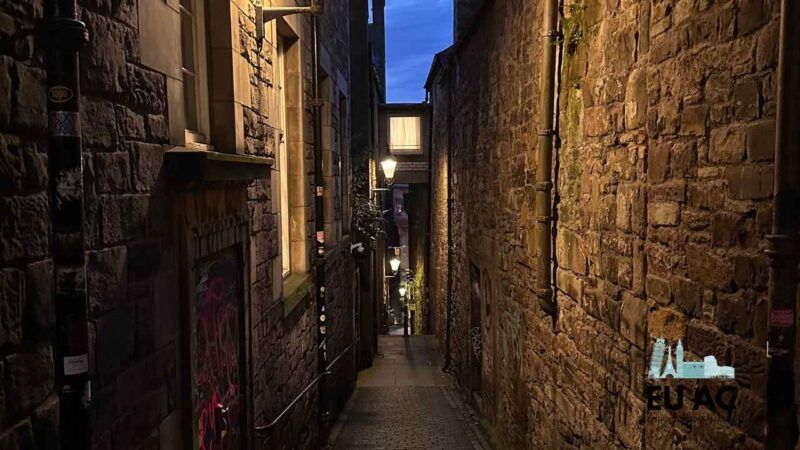
One of the best-known is Advocate’s Close, which offers one of the most photographed views of Edinburgh. It is also worth visiting Brodie’s Close, associated with Deacon Brodie—a respected craftsman who led a double life: by day he held an honest job, while by night he turned to theft. His story inspired Robert Louis Stevenson to create the character for *The Strange Case of Dr. Jekyll and Mr. Hyde*.
In Brodie’s Close, you’ll find Deacon’s House Café, a little spot where we stopped for a bite and had a wonderful experience.
Another interesting spot is Lady Stair’s Close, home to the Writers’ Museum, which is dedicated to three great figures of Scottish literature: Robert Burns, Walter Scott, and Robert Louis Stevenson.
Along the route, you will also find references to J. K. Rowling and Harry Potter. Edinburgh has many places that fans of the saga associate with its characters and stories, although it is worth distinguishing between documented references and popular associations that have emerged over time.
If you enjoy learning about the historical context of a place, a free walking tour of the old town can be a great way to start your trip. It allows you to explore part of the city with a guide and discover stories you might otherwise overlook. Keep in mind that these tours usually operate on a tipping basis—which doesn’t mean there is no cost involved.
The Real Mary King’s Close: an underground tour
To wrap up the day, we suggest a unique experience: The Real Mary King’s Close. It is a guided tour of historic spaces that were hidden beneath later structures, located in an area beneath Edinburgh’s city center.
During the tour, you will discover what life was like in these alleyways, the living conditions of their inhabitants, and how the city changed over the centuries. The visit combines history and storytelling to help you visualize daily life in a bygone era.
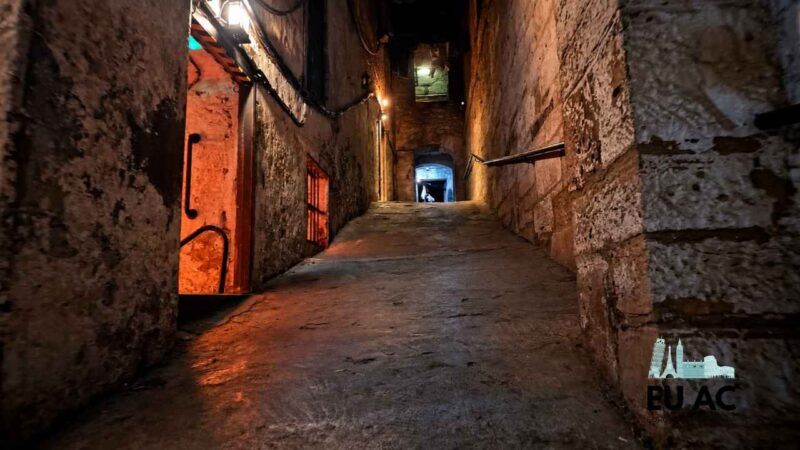
We visited at night and really enjoyed the atmosphere. It is an activity that offers a different perspective on the city, beyond the monuments visible from the street.
It is advisable to book in advance and check the schedules, available languages, and access conditions for your dates.
Visit to The Real Mary King’s Close
For dinner, you can take the opportunity to try haggis, one of Scotland’s most famous dishes. It is traditionally made with sheep’s offal, oats, onion, fat, and spices. The description might put some people off, but we liked it so much that we had it again during the trip.
Day 2: Palaces, history, and Edinburgh’s best viewpoints
On the second day, we continue exploring the Old Town, this time heading towards the Palace of Holyroodhouse. Afterward, we will climb Calton Hill to enjoy the views and continue through the New Town, its gardens, and some of its museums.
Bakehouse Close, Museum of Edinburgh, and Canongate
We begin at Bakehouse Close, an alleyway that has become very popular among *Outlander* fans. Scenes featuring Jamie Fraser’s print shop were filmed here. While the print shop itself is fictional, the historic setting is real and retains an atmosphere that helps one imagine what this part of Edinburgh was like centuries ago.
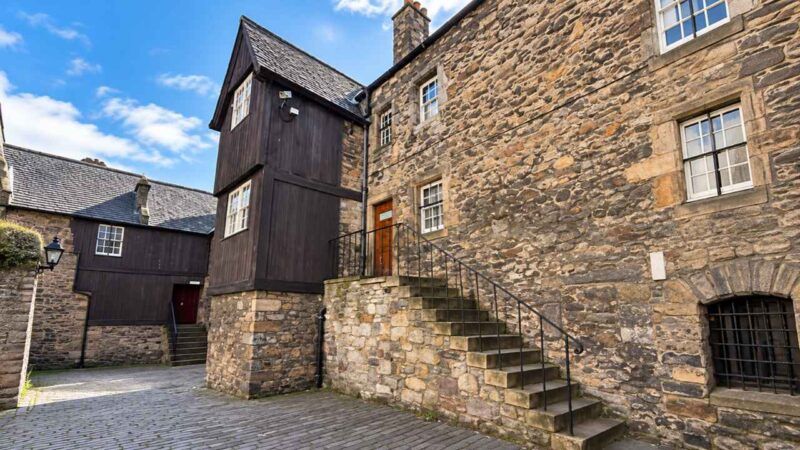
Next to the close lies the Museum of Edinburgh, housed in Huntly House, a historic 16th-century building. Inside, you can discover objects, documents, and curiosities that tell the story of the city’s evolution.
The Canongate Tolbooth is close by—a building dating from 1591, recognizable by the clock suspended over the street. Throughout its history, it served functions related to local administration, the justice system, and the prison system.
Right next door stands Canongate Kirk, a 17th-century church linked to the life of the city and to ceremonies involving the royal family. Its graveyard is the final resting place of figures such as Adam Smith, considered one of the fathers of modern economics.
These stops allow you to discover a part of the Royal Mile that is sometimes overshadowed by the castle but has plenty of stories to tell.
Palace of Holyroodhouse and Abbey
At the end of the Royal Mile lies the Palace of Holyroodhouse, the official residence of the British monarch in Scotland. It is one of the most important sites in the country’s history and is particularly associated with Mary, Queen of Scots, who lived there during part of the 16th century.
Durante la visita podrás recorrer los apartamentos históricos, las salas de recepción y otros espacios vinculados a la historia de la monarquía escocesa. La audioguía permite avanzar a tu ritmo y conocer los acontecimientos asociados a las distintas estancias.

Don’t leave without visiting the ruins of Holyrood Abbey, located within the same complex. Founded in the 12th century, it was one of Scotland’s great medieval religious centers. Its Gothic arches and stone walls allow you to imagine the scale of the original building.

Before you go, check the opening hours and any potential access restrictions, as the palace is still used for official engagements.
Tickets for the Palace of Holyroodhouse
The Scottish Parliament is located very close by; it is a contemporary building that contrasts with the surrounding historic architecture. If you are interested in politics or modern architecture, you can check the official information to see if tours are available during your stay.
Calton Hill or Arthur’s Seat: which viewpoint to choose
After visiting the Holyrood area, it is time to enjoy the views. Two well-known options are Calton Hill and Arthur’s Seat, although they require different levels of effort.
Arthur’s Seat is an elevation located in Holyrood Park that offers a more challenging hike, especially if you want to reach the summit. It is a great option for those who enjoy outdoor trails and have the time and energy.
We chose Calton Hill, a shorter option that allowed us to enjoy fantastic views without adding such a long walk to the itinerary.

Before heading up, you can stop by Old Calton Burial Ground, a historic cemetery featuring headstones and monuments from various eras. Once at the top, you will find iconic structures such as the National Monument and the Nelson Monument.
From Calton Hill, you can see Edinburgh’s city center, the castle, and much of the New Town. On a clear day, it is one of the best spots for photographing the city. Keep in mind that it can get quite windy at the top.
New Town, Princes Street, and their historic buildings
From Calton Hill, we continue toward the New Town, the area of Edinburgh associated with the urban expansion of the 18th and 19th centuries. Here, the landscape changes: the streets are wider, Georgian architecture takes center stage, and squares, shops, and monumental buildings appear.
You can stroll along Princes Street, one of the main shopping streets, and go to St Andrew Square, where Dundas House is located, a historic building that stands out for its architecture.
If you are interested in museums, the Scottish National Portrait Gallery is an interesting place to visit to learn about key figures in Scottish history through portraits and exhibitions.
It’s a good idea to take a break at some point during the tour. We took the opportunity to rest and have a drink at The Standing Order, a pub housed in a former bank building. The most striking feature is the interior, with its high ceilings, columns, and architectural details that are well worth admiring.
It is a good place to recharge before continuing your journey. If you come across an outlet of this chain while traveling in the UK, it can be a good option for a drink or a meal at prices that are generally more affordable than those at other establishments in tourist areas.
Scott Monument, National Gallery of Scotland and Princes Street Gardens
Afterwards, we headed towards Princes Street, home to one of Edinburgh’s most recognizable monuments: the Scott Monument, dedicated to the Scottish writer Walter Scott.
This Neo-Gothic tower, built in the 19th century, stands out for its dark color, numerous spires, and the sculptures adorning its structure. It is an integral part of the city’s skyline and is well worth pausing to admire while taking a walk.

The National Gallery of Scotland is very close by, housing a painting collection that features works by great masters. If you enjoy art, it is a fantastic opportunity to visit a centrally located museum without having to stray from your route. Check the official information to confirm access details for the permanent collection and temporary exhibitions.
Then comes the time to stroll through Princes Street Gardens, one of the most pleasant green spaces in the city center. The gardens lie at the foot of the castle and occupy the area where the Nor Loch—which was drained during the city’s urban transformation—once stood.
Today, you will find paths, trees, flowerbeds, fountains, and historical monuments. It is an ideal place to rest for a while and enjoy a different perspective of the castle.
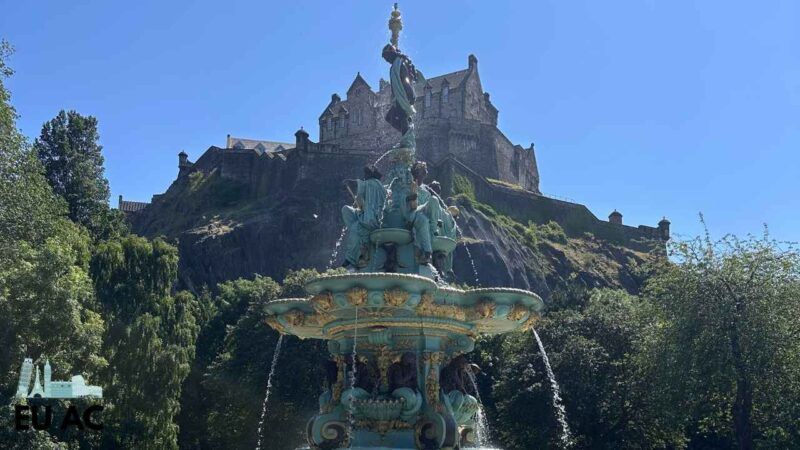
As you stroll through the gardens, make your way to the Ross Fountain—a cast-iron fountain in shades of green and gold—which boasts an unbeatable backdrop: the fortress atop the rock.
Upon leaving, you can visit St. John’s Episcopal Church, a Neo-Gothic church located at the western end of Princes Street. It is notable for its architecture and stained-glass windows, offering an interesting contrast to the area’s bustling commercial activity.
The Scotch Whisky Experience and Scottish gastronomy
After a busy day, you can book a visit to The Scotch Whisky Experience, located just off the Royal Mile. The experience offers insight into how Scotch whisky is made, the differences between the producing regions, and the role the drink plays in the country’s culture.
We aren’t huge whisky fans, but we enjoyed the visit. It’s an interesting activity even if you aren’t an expert, as it combines explanations with a tour that helps you better understand this tradition.
Hay diferentes tipos de entrada y duración, por lo que conviene revisar las opciones disponibles para tus fechas.

And while you’re in Edinburgh, take the opportunity to try other traditional dishes. In addition to haggis, you can look for Cullen skink—a creamy smoked fish soup—Scotch pie (a small meat pie), Scottish salmon, and cranachan, a traditional dessert made with cream, toasted oats, raspberries, honey, and whisky.
We were pleasantly surprised by the haggis and ended up having it again during the trip. Sometimes, getting to know a destination is also about sitting down at the table and being willing to try something new.
Day 3: Harry Potter, picturesque streets, and charming neighborhoods.
The third day combines culture, intriguing stories, spots linked to Harry Potter, and some of Edinburgh’s most photogenic locations. It is a varied day, ideal for alternating between museums and outdoor walks.
National Library of Scotland, The Elephant House, and a Harry Potter-themed shop.
We begin with the National Library of Scotland, an important cultural institution whose building is well worth a visit. Admission to certain areas and exhibitions may be free, though it is advisable to check which sections are open to the public during your visit.
We then continued along George IV Bridge to The Elephant House, a café that became famous among Harry Potter fans for its association with J.K. Rowling and the Edinburgh cafés where the author worked during the early years of the saga.
It is worth clarifying this story: the café became popular due to its connection to the author, but it is incorrect to claim that the entire saga was written there. Edinburgh is full of places that fans associate with the magical universe, although some connections are harder to prove than others.
Nearby you can find a Harry Potter themed store, where you can browse objects and souvenirs inspired by the saga. As businesses may change locations or hours, please check current information before you go.
Greyfriars Bobby and Greyfriars Kirkyard
We move on to one of the city’s best-known tales: the story of Greyfriars Bobby. According to tradition, this dog remained by his owner’s grave for years, becoming a symbol of loyalty. His statue stands near the entrance to Greyfriars Kirkyard.

The cemetery, Greyfriars Kirkyard, is a historic site that warrants a respectful stroll. Among the headstones and monuments are names and details that have sparked the interest of Harry Potter fans. Some people link certain surnames to characters from the saga, but it is best to present these coincidences as curiosities rather than definitive proof of inspiration.
If you want to delve deeper into the connection between Edinburgh and Harry Potter, you might consider a guided themed tour. It will help you discover the most popular stories and distinguish documented facts from urban legends.
Book the Harry Potter Free Tour of Edinburgh.
National Museum of Scotland: a visit for all audiences
The National Museum of Scotland is one of the places we recommend including in your itinerary, even if you don’t usually spend much time in museums. Its collections cover science, technology, natural history, design, world cultures, and Scottish history.
Among its best-known exhibits is Dolly, the sheep that became the first mammal cloned from an adult cell. It is one of the scientific stories that sparks the most curiosity among visitors.
Another of its attractions is the panoramic terrace, from which you can look out over the rooftops and part of Edinburgh’s city center. It is a great option for getting views of the city without having to climb a hill.

Admission to the permanent galleries is usually free, although there may be special paid exhibitions. Check the opening hours and terrace access before planning your visit.
Victoria Street, Grassmarket and The Vennel
After the museum, we head to Victoria Street, one of Edinburgh’s most picturesque streets. Its curved, colorful facades, independent shops, and sloping layout make it one of the city’s most popular photo spots.
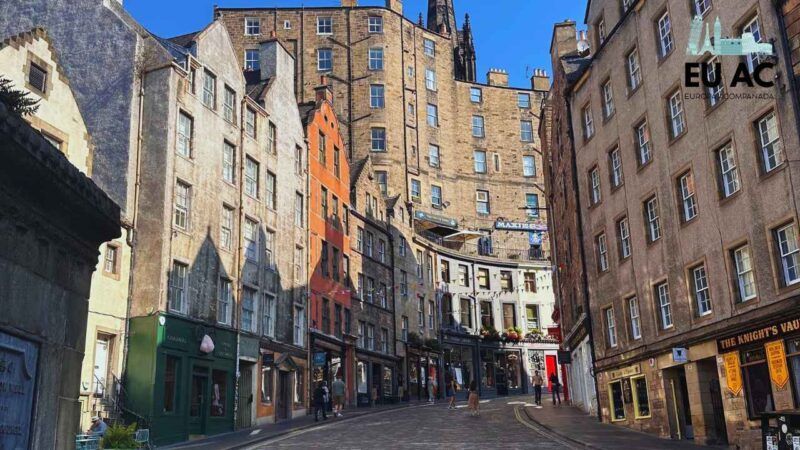
The street is often associated with the world of Harry Potter, but it is worth enjoying for what it is: a historic spot with plenty of character. If you want to take photos, try to go early, and remember that it remains a busy street used by pedestrians, residents, and local businesses.
From there, you can continue to Grassmarket, a historic square surrounded by pubs, restaurants, and stone buildings. It was once a marketplace and the site of grim episodes in the city’s history. Today, it is a lively area to stop for a meal, a drink, or simply to soak up the atmosphere.
To wrap up this stretch, look for The Vennel, a flight of steps offering a highly photogenic view of the castle. It is one of those spots where it is worth pausing for a few minutes to watch how the fortress dominates the skyline.

Stockbridge, Circus Lane and Dean Village
If you still have the time and inclination to discover another side of Edinburgh, you can continue on to Stockbridge and Dean Village. These neighborhoods have a different atmosphere from the Old Town and offer a chance to end the day with a more leisurely stroll.
In Stockbridge, you will find residential streets, cafés, and independent shops. One of the best-known spots is Circus Lane, a narrow street featuring traditional houses, doors, and facades that are covered in greenery at certain times of the year.
From there, you can head to Dean Village by following the path along the Water of Leith. The walk is approximately 1.8 kilometers long and usually takes about 25–30 minutes, excluding stops for photos. Allow a little more time if you want to enjoy the scenery at a leisurely pace.
Dean Village looks like a small village tucked away from the city, with stone houses, bridges, and a river running through the landscape. It is a particularly pleasant place for walking and taking photos, though it is important to respect the peace and quiet of the local residents.
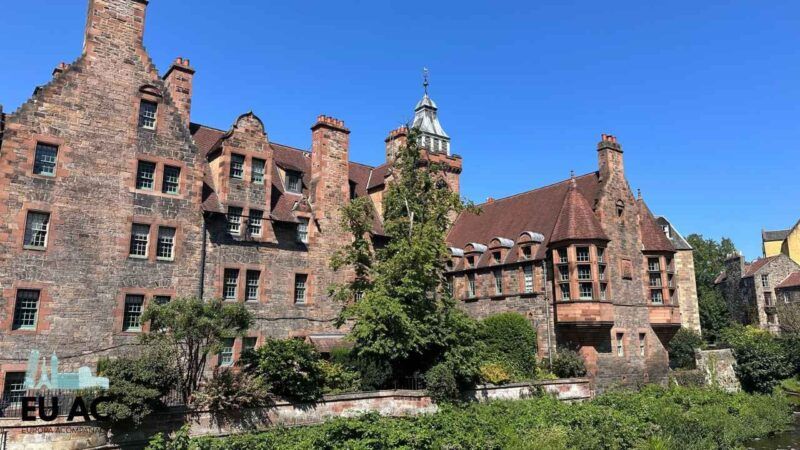
We walked back to our accommodation. If you are tired or prefer not to retrace your steps, you can check the bus connections available from the area.
This walk concludes a day that blends literature, culture, historic alleyways, and some of Edinburgh’s most beautiful spots.
Day 4: four alternative plans—choose one.
For the last day, we suggest four different options. They are not intended to be done all in a single day; choose one based on your interests, budget, and available time.
We decided to stay in Edinburgh and visit the Royal Yacht Britannia. If you prefer to leave the city, you can also opt for South Queensferry, an organized excursion involving the Jacobite steam train, or a trip to the Highlands.
Option 1. Royal Yacht Britannia: visit the former royal yacht.
The Royal Yacht Britannia was the British royal yacht and served the royal family for more than four decades. Today, it is docked in Leith, next to the Ocean Terminal shopping center, and can be toured with an audio guide.
To get there from Edinburgh city center, you can take public transport to Ocean Terminal. Check the route from your accommodation, as lines and frequencies may vary.
During the visit, you will see the spaces used by members of the royal family as well as the crew’s working areas. It offers a different way to engage with modern British history—far removed from castles, churches, and medieval alleyways.
We spent about two hours on the tour and enjoyed being able to move at our own pace with the audio guide. The visit is interesting for both the most significant areas and the details of daily life on board.
Official website of the Royal Yacht Britannia
Check the current price, opening hours, and entry conditions before you go. The amount we paid during our trip serves only as a reference for that specific visit, not as a current rate.
Option 2. South Queensferry and the Forth Bridges
If you feel like getting out of Edinburgh without dedicating the whole day to a long excursion, an alternative is to visit South Queensferry, a town located by the Firth of Forth.
The area is known for its views of the Forth bridges, including the Forth Bridge—a historic railway structure recognizable by its metal construction. The landscape shifts with the weather and the light, making it a great outing for those who enjoy photography and waterside walks.

You can plan your visit by taking the train to Dalmeny station and continuing on foot to the village. Check the route and walking time to properly plan your day. Once there, you can stroll through the streets, head to the waterfront, and find spots to view the bridges.
Depending on the season and availability, you might also consider a boat trip on the estuary. Before booking, check the departure point, duration, and what the tour includes.
This option is ideal if you want to experience a landscape different from that of the capital without planning a multi-day itinerary.
Boat tour of the Firth of Forth and the three bridges
Option 3. Excursion to travel on the Jacobite train, the famous Hogwarts Express.
If you are a Harry Potter fan, you might want to use the final day of your four-day Edinburgh itinerary to check out the Jacobite train, famous for its visual association with the Hogwarts Express from the movies. It is a very popular experience among travelers visiting Scotland.

The train travels from Fort William through Highland scenery, including the famous Glenfinnan Viaduct. It does not depart from Edinburgh city center, so you need to check the arrangements for getting to the departure point.
There are organized tours marketed from Edinburgh that can include transport and different services, depending on the package. Carefully review what the chosen option includes: bus, train tickets, schedules, stops and free time may vary.
Excursion from Edinburgh to ride the Harry Potter train
It is important to book in advance and confirm the actual availability of the train for your dates. Schedules and conditions are subject to change, and demand is usually high during tourist seasons.
Given the travel time and the duration of the activity, consider this a full-day commitment rather than a quick visit that can easily be combined with other activities in Edinburgh.
Option 4. Day trip to the Highlands
The fourth option is to take an organized excursion to the Scottish Highlands. It is a great way to discover landscapes of mountains, lochs, and valleys if you do not plan to rent a car or continue your journey through the country.

Routes vary by operator. Some focus on scenery and villages, while others include stops at historical sites or areas associated with Scottish legends. Before booking, check the itinerary, duration, time spent on the bus, and the included stops.
We decided to explore the Highlands by car over several days, rather than taking a round-trip excursion from Edinburgh. This allowed us to tour the region at a more leisurely pace. If you are interested in that part of the trip, we will soon be sharing a dedicated Highlands guide on *Europa Acompañada*.
Highlands Day Trip from Edinburgh
If your trip ends in Edinburgh and you have no extra days, an organized excursion can be a practical solution. If, on the other hand, you plan to continue traveling around Scotland, you might want to set aside more time for that region.
Practical tips for planning your trip to Edinburgh
In addition to deciding what to see in Edinburgh over four days, it is worth sorting out a few details to make the most of your time. These tips are based on our own travel experience and on things we recommend checking before you set off.
Where to stay in Edinburgh
If it’s your first visit and you want to explore the historic center, staying near the Royal Mile or Old Town can save you travel time. We chose accommodation in that area, and it was very convenient to start each day on foot. Our accommodation: Adagio Hotel Apartment Royal Mile.
The location is especially convenient during the first two days, when much of the itinerary focuses on the Old Town and nearby areas. The New Town can also be a good base if you prefer to be close to shops and transport links.

The price will depend on the dates, how far in advance you book, and the type of accommodation. During our trip, we paid around 230 euros for a double room without breakfast, but that is just a reference point from that specific stay, not a rate you can expect to find today.
Before booking, compare the location, cancellation policies, breakfast, and distance to public transport stops.
How to get around Edinburgh
The historic center is walkable, and we explored it on foot for the first two days without using public transport. However, there are hills, stairs, and uneven pavement, so wear comfortable shoes and allow time to rest.
On the fourth day, we used public transport to get to Leith and visit the Royal Yacht Britannia. If you are staying outside the city center or plan to visit several locations further afield, check the bus and tram connections based on your itinerary.
A practical tip is to check your route on your phone before setting out, especially if you have timed tickets. Don’t plan every single minute: stops to take photos, visit a church, or grab a drink often extend the journey.
Tickets and activities: what to book for a 4-day trip to Edinburgh
Some visits may sell out or have specific time slots, so it is worth organizing in advance the ones that interest you the most. Among those that should be reviewed are:
- Edinburgh Castle—our recommendation: take a guided tour.
- The Real Mary King’s Close.
- The Palace of Holyroodhouse, depending on the date.
- The Scotch Whisky Experience.
- The organized excursions on the fourth day, especially those that include the Jacobite train.
Before paying, check what each activity includes, as well as the duration, meeting point, language, and cancellation policy. Prices and schedules may vary depending on the season.
Mobile internet: maps, schedules, and reservations
Having an internet connection while traveling is very handy for checking maps and schedules, finding bus stops, or accessing reservations. We use our phones constantly to find our way around and coordinate our visits.
One of the options we use is the Holafly eSIM. Purchasing it was easy, and having mobile data was useful for looking up necessary information during the trip. Make sure your phone is eSIM-compatible and check the terms of the plan you choose.
If you want to check out the options, you can use the code EUROPAACOMPANADA 5; it offers a 5% discount on eSIMs and 10% off Holafly Plans for the first 12 months.
Travel insurance and budget for what to see in Edinburgh in 4 days
Although Edinburgh is a city best enjoyed on foot, traveling with appropriate insurance can help you handle medical emergencies, luggage issues, or other situations covered by the policy. Compare coverage and exclusions before purchasing. Here are options from IATI Travel Insurance and Go Assistance.
When calculating your budget, take into account accommodation, meals, transport, admission fees, and potential excursions. Not all visits come with a cost: you can stroll along the Royal Mile, explore many of its alleyways, enjoy the viewpoints, and visit certain free permanent galleries.
The key lies in deciding which experiences are a priority for you and setting aside the budget for them. If you prefer visiting many historic interiors, you will need to allocate a larger portion of your budget to entrance fees. If you enjoy walking around the city more, exploring neighborhoods and viewpoints can take up a significant part of your itinerary.
Frequently asked questions about what to see in Edinburgh in 4 days
Are four days enough to visit Edinburgh?
Yes, four days allow you to see the main monuments in the historic center, visit several museums, discover spots linked to Harry Potter, and explore neighborhoods like Stockbridge and Dean Village. You can also dedicate the last day to an excursion outside the city. You won’t be able to see everything, but with an organized itinerary, you can enjoy a fairly comprehensive first visit.
What are the must-see sights in Edinburgh?
Among the places we would prioritize are Edinburgh Castle, the Royal Mile, St Giles’ Cathedral, the historic closes, Calton Hill, Victoria Street, Grassmarket, and Princes Street Gardens. If you have more time, add the Palace of Holyroodhouse, the National Museum of Scotland, and Dean Village.
Can you explore Edinburgh on foot?
Yes, many of the places on this itinerary are located in the city center and can be visited on foot. We walked everywhere during the first two days. Keep in mind that there are inclines, stairs, and cobblestone streets, and that you will need to plan transportation for trips to Leith or excursions outside the city.
What to do in Edinburgh if it rains?
You could take the opportunity to visit the National Museum of Scotland, the National Gallery of Scotland, the Scottish National Portrait Gallery, the Museum of Edinburgh, or the castle, depending on access conditions. You can also book an experience such as The Real Mary King’s Close or The Scotch Whisky Experience. Check opening times and ticket details before you go.
What Harry Potter locations can you visit in Edinburgh?
You can walk along Victoria Street, visit Greyfriars Kirkyard, stop by The Elephant House and browse themed shops. The city is linked to many stories about the saga, but some associations are popular and not necessarily documented as direct sources of inspiration. If you want to know them in context, you can take a thematic tour.
What to choose for the fourth day: the Royal Yacht, South Queensferry, the Jacobite train, or the Highlands?
It depends on what you are looking for. The Royal Yacht Britannia offers a unique visit that allows you to stay in Edinburgh; South Queensferry is a great outing for viewing the Forth bridges; the Jacobite train is ideal for Harry Potter fans; and the Highlands are a good choice if you want to spend the day taking in Scotland’s most beautiful scenery.
Do not try to combine the four plans; they are designed as alternatives, so you can choose one.
Is it necessary to book visits in advance?
It isn’t necessary for everything, but it is recommended for activities with limited capacity or specific time slots—such as The Real Mary King’s Close, certain guided tours of the castle, and some excursions. Always check the conditions for your dates and book the experiences that interest you most first.
Where is the best place to stay to visit Edinburgh in four days?
The Old Town and the Royal Mile area are convenient for a first visit because you can start many of your days on foot. The New Town can also be a good base, especially if you are looking for transport links and nearby shops. Compare the actual location, accommodation conditions, and prices for your dates.
Conclusion: plan your route and enjoy Edinburgh at your own pace.
Edinburgh has enough monuments, narrow lanes, museums, and picturesque spots to fill four days without having to rush. With this itinerary, you can discover the medieval city, learn about its history, seek out its literary connections, enjoy the views from Calton Hill, and stroll through distinctive neighborhoods like Stockbridge and Dean Village.
Our advice is to book the visits you are most excited about in advance, leave time to get lost in the streets, and not try to see everything at all costs. Part of Edinburgh’s magic lies in pausing in an alleyway, stepping into a historic pub, or gazing at the castle from an unexpected viewpoint.
Remember that for the fourth day, you will have to choose between the Royal Yacht Britannia, South Queensferry, the excursion involving the Jacobite train, or the Highlands. The best option will be the one that suits your travel style and what you wish to discover about Scotland.
If this guide has helped you plan your trip, you can save the article and refer back to it while organizing your route. And if you’ve already been to Edinburgh, let us know in the comments which place you liked best or what stop you would add to this itinerary.
¡Nos vemos en el próximo viaje con Europa Acompañada!
Download the PDF mini-guide on what to see in Edinburgh in 4 days.
Do you want to take the itinerary with you during your trip? We’ve prepared a mini PDF guide with maps organized by day, so you can check the routes as you explore the city.
Download it and save it to your phone to keep the maps handy and plan your visits more conveniently.
NOTE: The information in this article is based on our own experience and is completely objective. This article contains affiliate links.


