Timisoara isn’t just another city on the map of Romania; it’s an explosion of color, history, and energy that captivates you from the moment you step foot in it. When we arrived—on a moody July day, alternating between sun and rain—the light played off the pastel facades of the historic center, and everything looked like something out of an old but vibrant European film.
At first glance, you understand why it’s known as “Little Vienna“: it has imperial elegance, spacious squares, and a vibrant cultural scene, but with that warm, spontaneous touch of western Romania.
Indice:
A first look: my arrival in Timisoara
We arrived just after a downpour, as the sun broke through the clouds. The contrast made the facades shine as if they had been painted minutes before. Walking through the city center, the air smelled of wet earth and freshly brewed coffee. Timisoara presented itself like that: authentic, colorful, and alive, even in the rain.
We arrived just after a downpour…
Here you can see what the city looked like that day:
Video from Timisoara
What to see in Timisoara: places you can’t miss
Unirii Square: the colorful heart of the city

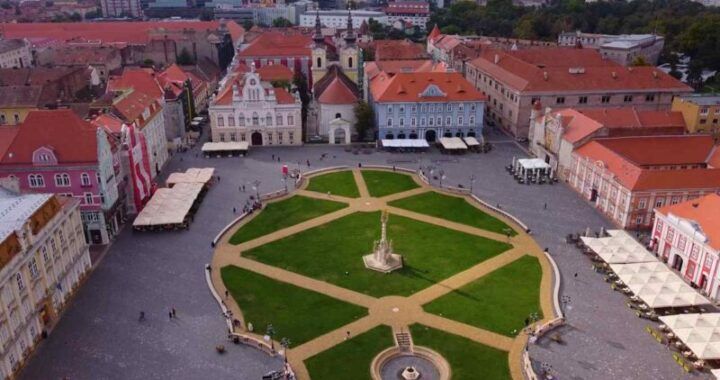
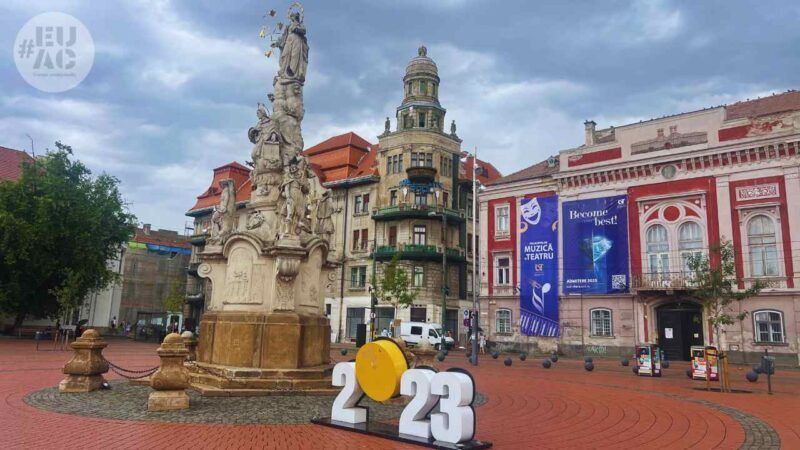
If there’s one place that encapsulates the spirit of Timisoara, it’s Unirii Square. The Baroque buildings, painted in pastel tones, are reflected in the puddles after the rain, creating a picture-perfect setting.
In our case, it was the spot we fell in love with the most. No photo can do it justice: the Baroque Palace, the Catholic Cathedral of St. George, the Serbian Orthodox Cathedral, and the lively terraces form a picture that’s hard to forget.
What activities can I do in Romania?
Orthodox Cathedral and Piata Victoriei
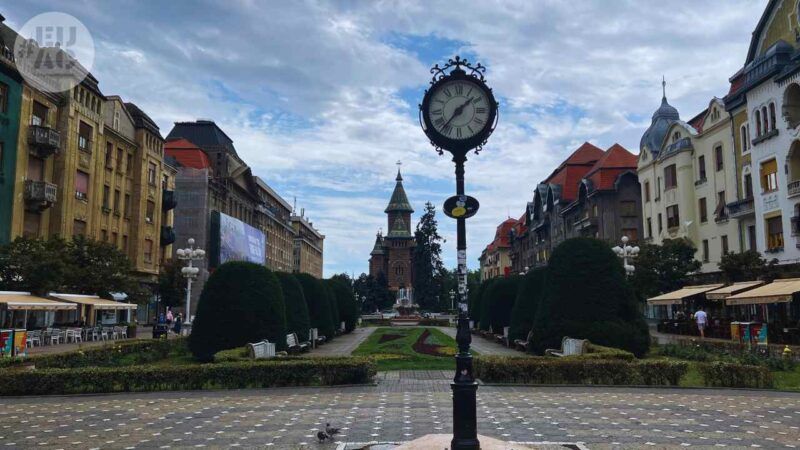
Walking from Unirii to Piata Victoriei is like crossing different eras. The Orthodox Cathedral, with its mosaic towers, dominates the skyline and sets the spiritual rhythm of the city. Facing it, the opera house, cafes, and galleries recall the Austro-Hungarian era.
Here, urban life is intense: street artists, markets, and bars with terraces that seem to never close.
Walk along the Bega River
The Bega River runs through Timisoara and offers one of the most relaxing walks in the city. You can walk, rent a bike, or even hop on one of the tourist boats that travel along the canal. It’s ideal at sunset, when the sky turns pink and the buildings reflect the last rays of the sun.
Tips for visiting Timisoara
Best time of the year
Summer (June to September) is perfect if you enjoy a lively atmosphere and outdoor festivals. In July, when we were there, the heat was bearable and the nights cool, although you might get caught out by the occasional downpour (as we did!).
If you prefer something quieter, May and October are ideal for enjoying the city without so much tourism.
How to get there and get around
Timisoara has its own airport, with direct flights from several European cities. From Bucharest, it’s about a 9-hour drive or a 1-hour flight.
Getting around the city is easy: you can walk or take the tram. The city center is pedestrianized, and everything is relatively close.
Where to sleep and where to eat
The historic center is the best area to stay: you’ll be just steps from the main attractions and the prettiest cafes.
For food, try the typical dishes of Banat (the region where Timisoara is located): hearty soups, grilled meats, and desserts with berries.
If you like the local atmosphere, look for restaurants near the Bega River or in Piata Libertatii, where locals and travelers mingle.
Why Timisoara feels different

Timisoara has a special energy. It’s modern but retains its ancient soul, effortlessly blending cultures and surprising at every turn.
When we visited, between rain and sun, I had the feeling of being in a city that doesn’t need to boast to shine: it’s enough to experience it.
That authenticity, combined with its history and unique aesthetic, make it one of the most pleasant—and still little-known—destinations in Western Europe.
Conclusion
Timisoara is a destination that combines history, art, and local life in perfect balance. It’s not a city of “grand monuments,” but of moments: an afternoon in Unirii Square, a beer by the Bega, or a summer storm that leaves the streets sparkling.
Visiting it is like discovering a different, bright, and open Romania. If you plan to explore the country,
Frequently Asked Questions
Where is Timisoara?
In western Romania, near the border with Serbia and Hungary, in the Banat region.
How many days does it take to see it?
Two or three days are enough to cover the essentials without rushing.
What to see near Timisoara?
Huniade Castle, Lake Surduc, or the villages of Banat are excellent getaways.
Have you seen our route through Transylvania?
NOTE: The information in this article is based on our own experience and is completely objective. This article contains affiliate links.