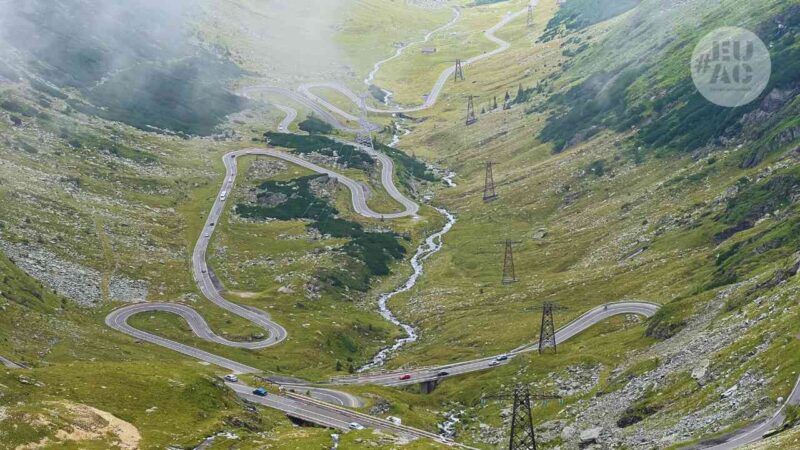
Transylvania is a historic region in central Romania. It’s surrounded by the Carpathian Mountains, which we saw in our previous video when we traveled along the Transfagarasan Highway.
There are places in this world where history whispers among the shadows and where every stone holds ancient secrets. Today we delve into the heart of Romania, into a land where reality surpasses legend..
Welcome to Transylvania!!
Our trip will begin with two nights in Brasov. We traveled the entire route by car. We always search for our trips using the Discovercars search engine.
Indice:
Brasov

We arrived in this beautiful city. In the heart of Transylvania lies Brasov, one of the most beautiful and most visited cities in Romania. Surrounded by the Carpathian Mountains, it perfectly combines medieval history, nature, and a vibrant atmosphere attracting travelers from all over the world.
Its historic center is a true journey back in time: Council Square, with its colorful Baroque facades, is the ideal place to begin your visit. It is home to the Casa Sfatului, the former town hall, which now serves as a museum.
We chose the Safrano Hotel in the historic center to stay, across from the square. It was great to wake up and find ourselves in that dreamy square when there were hardly any people around. The location was a good choice; the rooms were very spacious, although dated and without an elevator, as is often the case in historic centers when one chooses old mansions, but for us it was a good choice. Breakfast is included.
Just a few steps away is the imposing Black Church, one of the largest Gothic churches in Eastern Europe, famous for its Baroque organ and the oriental carpets that decorate its interior.
Brasov is also nature: Mount Tampa offers one of the best panoramic views of the city. From there, you can appreciate how the city is surrounded by forests and mountains, perfect for hiking. Look here to plan your complete visit to Brasov!
From here, we visited two castles for the day, one in Transylvania and the other in Wallachia, but due to its proximity and its availability from Brasov, we’re including it here: Peles Castle. We’ll travel about 30 kilometers from Brasov and head to Transylvania’s most iconic castle, Bran Castle, also known as Dracula’s Castle.
Bran Castle, Transylvania

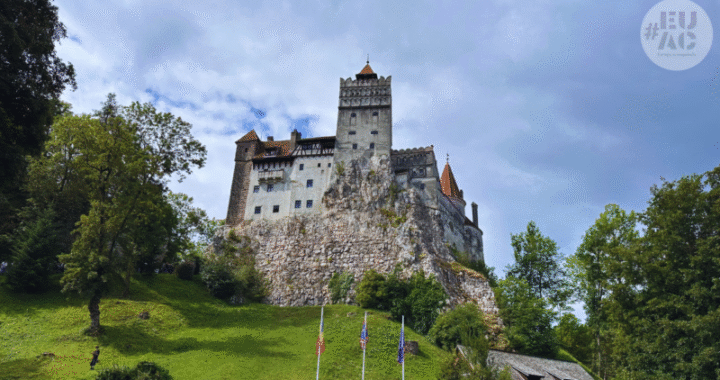
Bran Castle is probably Romania’s most famous castle, thanks to the legend of Dracula. Although it wasn’t the royal home of Vlad the Impaler, the historical figure who inspired the Count, its appearance fits perfectly with everyone’s image of a Gothic and mysterious castle.
Today, in addition to medieval history, the castle offers exhibitions that tell the story of both Queen Maria of Romania, who lived there in the 20th century, and the famous connection with Bram Stoker’s novel.
When we think of Transylvania, we all think of Dracula, thanks to the Irish writer Bram Stoker who was inspired by Bran Castle to create one of the masterpieces of Gothic literature: Dracula.
You can get tickets on the official website
The standard ticket costs 90 lei (€18), but you have a priority access option for 150 lei (€30). As you can see, it’s very touristy. Tickets don’t have time slots, so you’ll have to wait in line if you get the regular ticket (at least in the summer, like we did).
It opens at 12 noon on Mondays, and at 9 a.m. Tuesday through Sunday. Tip: We went when it opened and skipped the line at all. We handed in our ticket and entered. The surrounding area is beautiful, but don’t get distracted when you arrive. It’s a priority to skip the line, so you’ll have time to explore more of Bran later.
But if you want a more relaxed time or don’t have a car, you can visit on a
guided tour that also includes the visit to the next castle. Be careful when taking tours; read the details, because some require you to add admission to the castle separately. What you’re buying is transportation and the accompanying Spanish-speaking guide. That’s fine, but keep that in mind.
We hit the road again, now leaving Transylvania for a few kilometers. From Bran, we’d travel about 50 kilometers.
Peles Castle
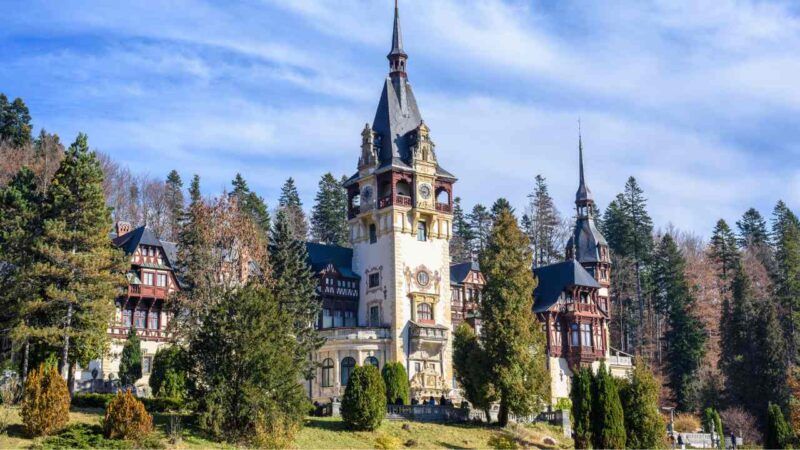
In the city of Sinaia, at the foot of the Carpathian Mountains, lies one of the most beautiful castles in all of Romania: Peles Castle. It’s not a medieval fortress like the ones you’ll find in Transylvania, but the former summer residence of the Romanian royal family, built in the late 19th century.
When you first see it, it looks like something out of an Alpine fairy tale, with its towers, balconies, and pointed roofs surrounded by mountains. But the most surprising thing is inside: more than 150 rooms decorated with carved wood, stained glass, and luxurious details. There are rooms inspired by styles from all over Europe: from the Italian Renaissance to German Baroque. It was even one of the first castles in Europe to have electricity and central heating.
The truth is, it’s well worth it; the interior is magnificent. As I mentioned, you can visit from Brasov; there are also excursions that include it. It’s very popular, so even though admission is timed, there are quite a line.
The entrance fee is 100 Lei (about 20 euros), and there are time slots. You can purchase it on the official website or book a tour that includes other castles in addition to this one.
Excursion to the castles of Transylvania.
Right next door is Pelișor Castle, smaller but incredibly charming. It was built as a residence for the heir to the throne and his wife, Queen Maria, who also left her personal touch in the decor. There, you’ll find rooms with a much more modern style for the time, with Art Nouveau influences, golden colors, and a much more intimate feel that contrasts with the grandeur of Peleș. Entrance to this castle is 30 lei (€6).
Cantacuzino Castle
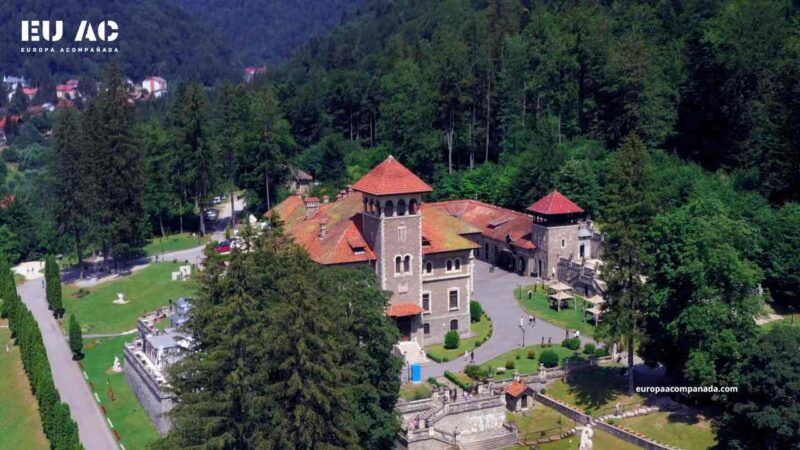
We were heading back to Brasov. On the way from Pelisor, we were surprised by another castle we didn’t know was there, but I want to leave you with the information in case you watch the series “Mércoles” (Wednesday), or “Merlina” as it’s known in Latin America. In the town of Bușteni, you’ll find Cantacuzino Castle, which became famous thanks to the Netflix series “Merlina” (Wednesday), because the exterior scenes of the Never Again Academy were filmed there. We didn’t go inside, but we saw a lot of people going in, and from there we found out why. I’m sharing this information with you in case you’re interested. There are also excursions that connect it to Peles.
Transylvanian cuisine combines Hungarian, German, and Romanian influences, with strong flavors and very traditional dishes such as Sarmale, Transylvanian-Hungarian Gulaș, and polenta as a side dish.
Fagaras
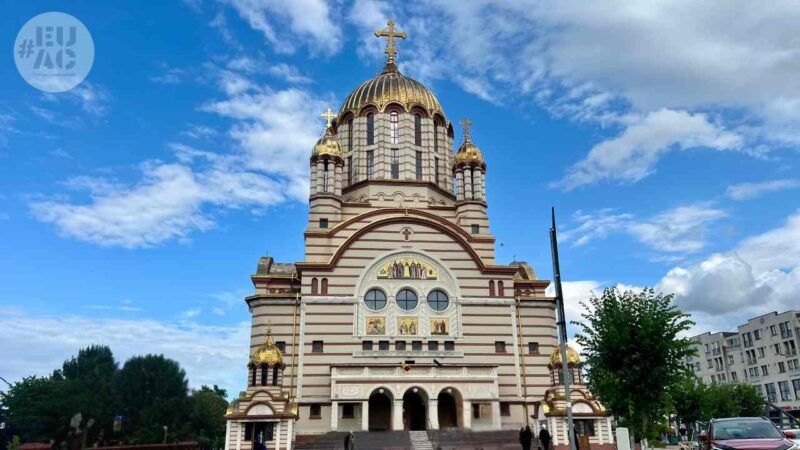
On our route through Transylvania, we came across Făgăraș, a place that surprised us from the very beginning. The first thing that caught our attention was Făgăraș Castle, an impressive 14th-century fortress with enormous walls and a moat that looks like something out of a medieval tale.
Another thing you definitely won’t miss is its Orthodox cathedral, a true beauty. The
Sighisoara
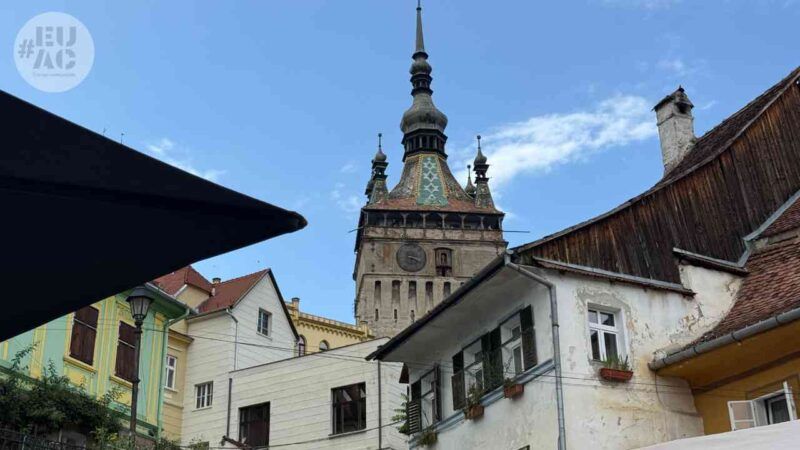
Continuing our route through Transylvania, we arrived in Sighișoara, one of those cities that seems frozen in time. Its medieval old town, declared a UNESCO World Heritage Site, is simply enchanting: cobblestone streets, colorful houses, and towers that look like something out of a fairy tale. Walking through its narrow streets is like traveling back in time, where every corner holds a story and every building tells something about life in centuries past.
The city’s most famous symbol is the Clock Tower, which dominates the central square and offers spectacular views of Sighișoara and the surrounding area. Inside the tower, you can visit a small museum and learn about the city’s history and its medieval defenses. Nearby is the covered staircase, a wooden passageway that connects the lower town with the church on the hill and once protected children on their way to school in the winter.
Another point we couldn’t miss was the Vlad Dracula House, birthplace of the famous Vlad the Impaler, whose figure inspired the legend of Dracula, today it is a small museum and hotel.
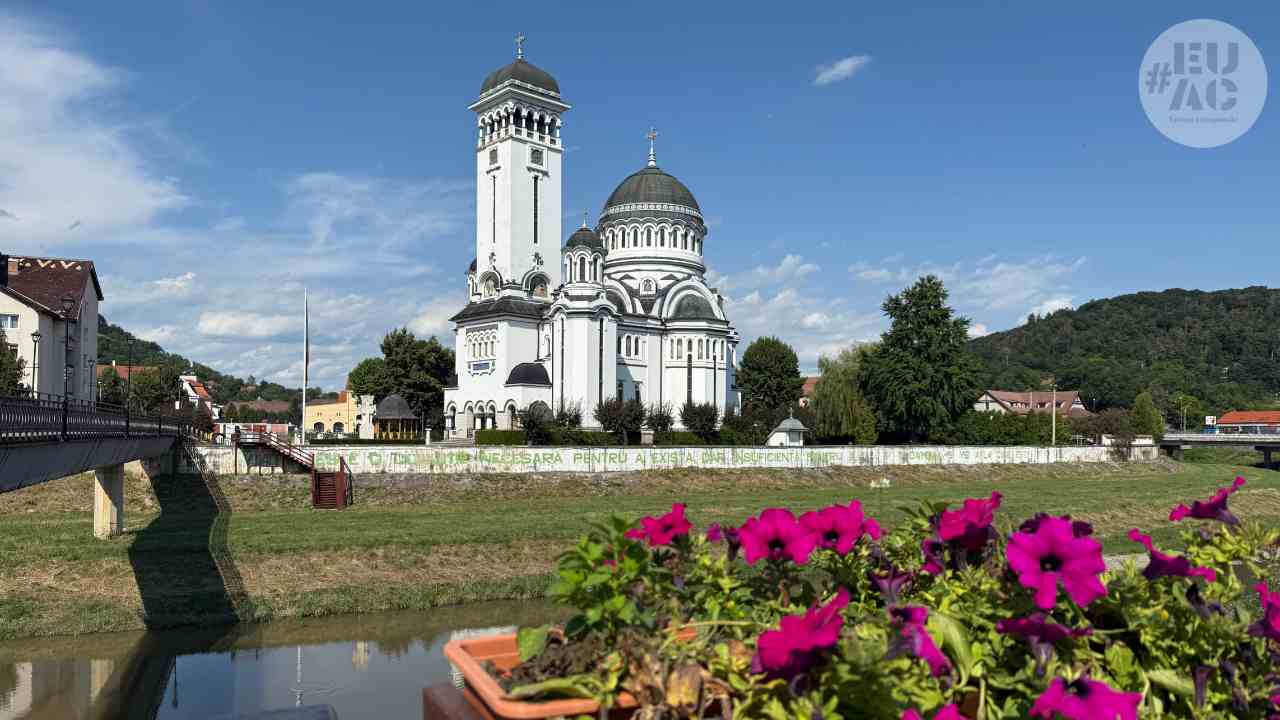
We stayed in the historic city center at the Hotel Sighisoara. It doesn’t have an elevator, but the location was a great choice, perfect for enjoying the city.
If you like landscapes, climbing the walls and towers offers panoramic views of the surrounding area and the red roofs that characterize the city, a picture that will remain etched in the memory of any traveler. Look here to plan your complete visit to Sighisoara!
At night we tried Transylvanian dishes again and chose Dracula’s house to do so.
Biertan Fortified Church
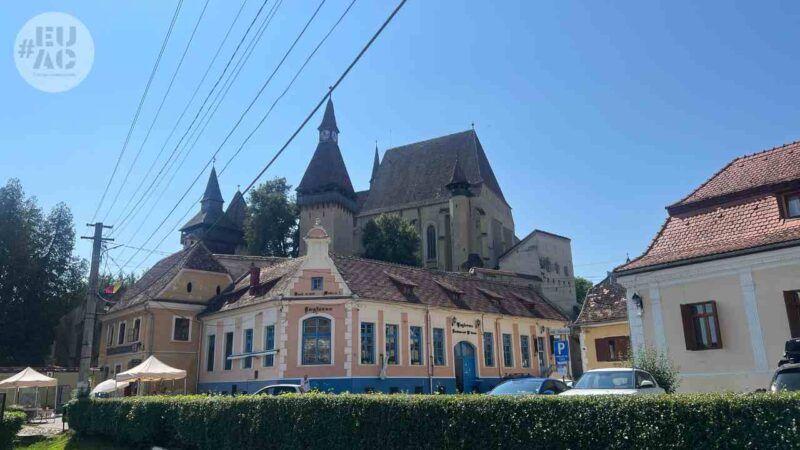
Today we would have approximately 100 kilometers to our destination in Sibiu to spend another night, but we would first stop to see a fortified church, one of the many in Romania.
As on all our trips, we were connected thanks to the Holafly eSIMs, essential for keeping Waze in the car at all times so you don’t miss the route, and for uploading stories to social media to tell you what we’re seeing in real time. We’re leaving a discount coupon for your travel companions. : EUROPAACOMPAÑADA5
We arrived at Biertan, a small village that surprises from the very first moment. Its fortified church, declared a UNESCO World Heritage Site, is undoubtedly its main attraction: an impressive medieval structure surrounded by walls, towers, and passageways that speak of centuries of history and defense by the Saxon community.
It was built by the ethnically German community of Transylvanian Saxons in the 15th century, a period when these areas belonged to the Kingdom of Hungary. An inscription on the triumphal arch, showing the year 1522, may indicate the year of its completion.
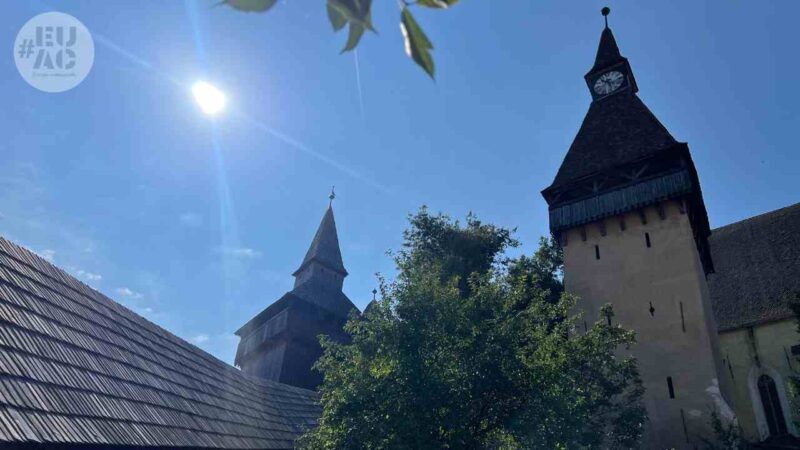
Many churches in Transylvania, such as the one in Biertan, were fortified during the Middle Ages because the villages needed to protect themselves from invasions and attacks. These churches were not only places of worship, but also safe havens for the community, with walls, watchtowers, and passageways that allowed for defense while maintaining daily life within the walls. Thus, these structures combine spirituality and defense, and today they show us how the inhabitants of Romania lived and protected themselves in past centuries.
The entrance to the fortified church costs 15 Lei (3 €) which is paid on site.
We went by car, but there’s a Biertan excursion from Sighisoara that includes a tour, so that might be a good option.
We thus arrived in Sibiu, the city of eyes, to spend a night.
Sibiu
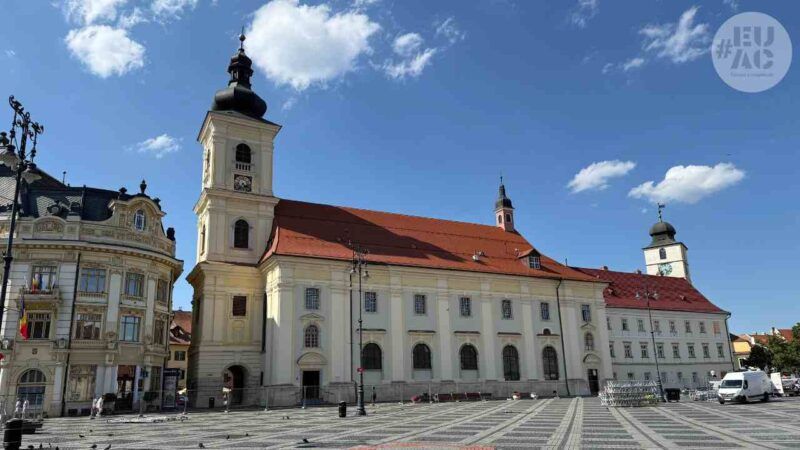
Continuing our route through Transylvania, we arrive at Sibiu, one of the most vibrant and historic cities in the region. Its old town is full of squares, cobblestone streets, and colorful buildings that look like something out of a fairy tale.
Something that immediately caught our attention were Sibiu’s eyes, those triangular windows on the rooftops that seem to watch you as you walk. It’s said that they were used to ventilate the attics and also so residents could monitor the outside world, and today they’ve become the city’s most curious and photogenic symbol. Every old building has its own pair of eyes, and walking through the city, you start counting them, as if the city itself were watching you.
We stayed at the Hotel Marabella very close to the historic center. The rooms were very small, which was the only negative. The price was great, the service was wonderful, and they offer free parking on the premises.
Don’t miss the main square and the small square, where you can experience the local life and enjoy cafes, markets, and street music. You can climb the Council Tower for spectacular views of the rooftops, and from there, the sights of Sibiu become even more intriguing.
Hunedoara, Corvin Castle, Transylvania
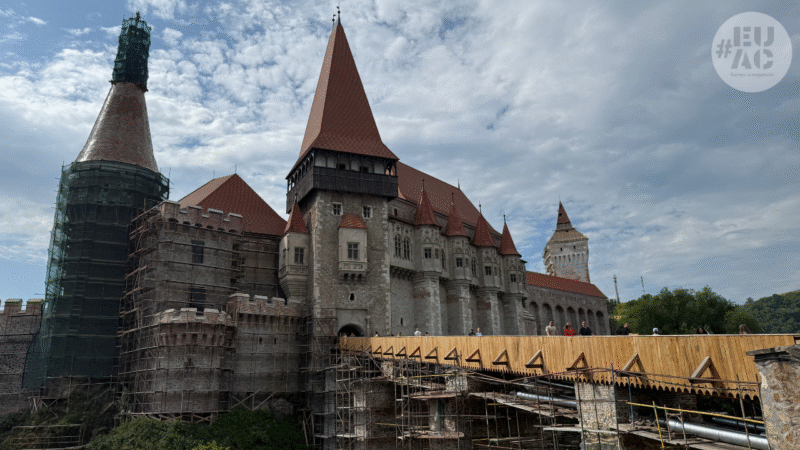
Dawn was breaking in Sibiu, and we had 130 kilometers of fun to go to Hunedoara, where Corvin Castle is.
In the heart of Transylvania, as if straight out of a medieval legend, stands Corvin Castle, one of the most impressive Gothic fortresses in Europe. Arriving here is like entering a world of knights, princesses, and mysteries, because the castle has that unique atmosphere that seems made for dreams.
The first thing that strikes you is the bridge that crosses a deep moat and leads us to a monumental entrance.
The castle was the residence of the powerful Hunyadi and later the setting for legends that are still told today, such as that of Vlad the Impaler, who some say was imprisoned within these walls. Every corner tells a story:
Admission costs 50 Lei (€10) and can be purchased on-site or on the official website.
We spent 5 days in Transylvania, which was very short considering all that Transylvania has to offer, so I’ll tell you what you can add:
Alba Iulia with its star-shaped citadel, very symbolic in Romanian history;
Cluj Napoca, the “unofficial” capital of Transylvania, a vibrant, cultural university city; the
Turda Salt Pans, an impressive salt pan definitely worth a visit; and the
Transfagarasan Highway to reach Wallachia. But we have a special post about this. How to Travel the Transfagarasan Highway
Map and video tour of Transylvania
NOTE: The information in this article is based on our own experience and is completely objective. This article contains affiliate links.