Indice:
DAY 1 – The essentials of Montevideo
For your first day in Montevideo, we suggest a comprehensive introduction to the city with a 3-hour guided tour: perfect if you’re short on time, arriving on a cruise ship, or if you want to get your bearings before exploring on your own. Here’s the Turismouy contact information for the tour.
Main Square (or Constitution Square)
First stop in the heart of the Old City. Here you’ll find:
- Antiques fair (Saturdays and high season).
- Historic marble fountain, symbol of the arrival of running water to the city.
Metropolitan Cathedral
Facing the plaza. Neoclassical in style and of colonial origin. Worth stepping inside for a moment.
Montevideo City Council
Former political center of the colonial city. Now a museum (free admission). We’ll leave it for another day of museums.
Independence Square

The most famous in Montevideo, where history and architecture coexist.
What you’ll see here:
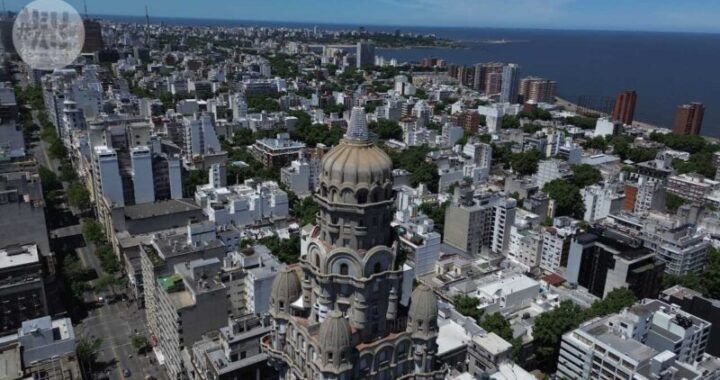
- Salvo Palace: an absolute icon of the city.
- Citadel Gate: the only visible remnant of the old colonial wall.
- Artigas Monument and Mausoleum.
- Solís Theatre: cultural jewel of 1856.
- Executive Tower: seat of the Executive Branch.
- Estévez Palace: former Government House, now a museum.
18th of July Avenue
The city’s main thoroughfare. We travel along it to continue on to other neighborhoods.
Legislative Palace
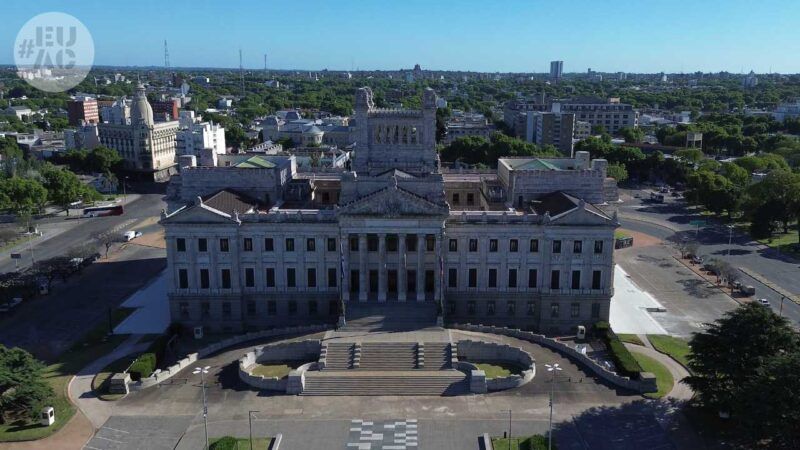
One of the most beautiful parliaments in the world. Marble, stained glass, and monumental architecture.
The surrounding area also features:
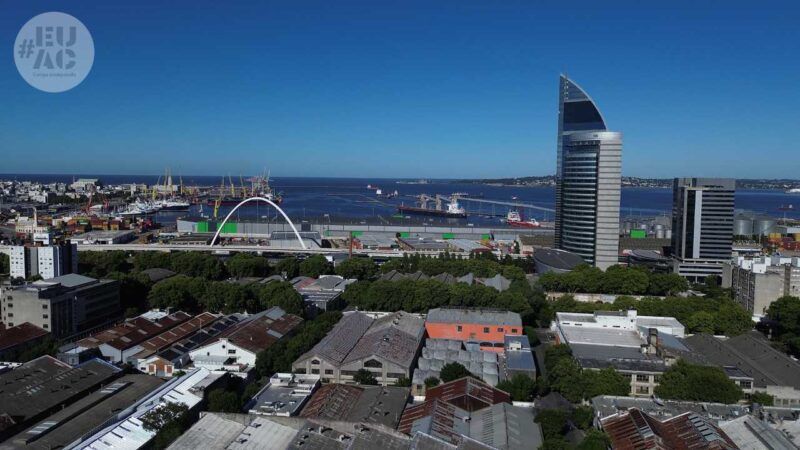
- Telecommunications Tower
- Electoral Court Building (former Soler Store)
- May 1st Square
Montevideo Agricultural Market (MAM)
A restored historic market, now full of life: fruits, crafts, cafes and restaurants inside a spectacular restored iron structure.
Centenario Stadium and Football Museum
Host of the first World Cup in 1930 and a historic monument of world football.
In the surrounding area you will see:
- Flag Square
- Monument to John Paul II
- Obelisk to the Constituent Assembly
Monument to the Cart
Emblematic sculpture by José Belloni, located within Batlle Park.
Montevideo Rambla + Montevideo Sign
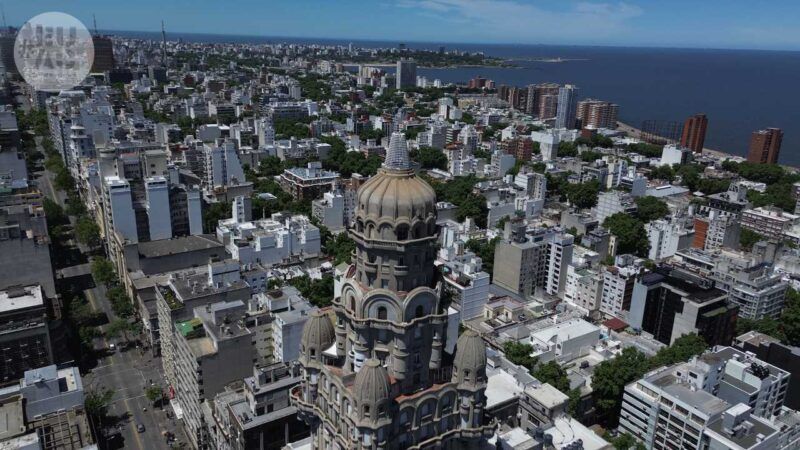
The Rambla is the heart of the city and an absolute must-see.
A must-stop at the Montevideo sign in Pocitos—a classic photo opportunity for everyone.
Port Market
We return to the Old City to explore this classic spot, brimming with grills, history, and local atmosphere. If you’re staying in the area, you can also visit the Carnival Museum.
Optional local experience: Asado Experience
To end the day, if you want a truly Uruguayan experience, a dinner with asado (barbecue), wine, and craft beer at Raúl’s house is the best way to get to know the local culture from the inside. Here’s how to contact Asado Experience.
DAY 2 – Tristán Narvaja Fair, Montevideo City Center and viewpoints
For this second day, we continued exploring Montevideo on foot and by public transport, taking advantage of the fact that many of its attractions are close to each other. It’s a perfect day to experience the local rhythm, especially if it’s a Sunday.
Tristan Narvaja Fair
The perfect way to start your Sunday. The market occupies several blocks in the Cordón neighborhood and is one of the most traditional in the country. Here you’ll find a mix of used books, fruit, records, plants, crafts, and antiques. It’s an authentic, popular, and very representative outing in Montevideo.
18th of July Avenue
From the fair, you walk down to 18 de Julio, the city’s main avenue. Along the way, you’ll see daily life, historic buildings, and traditional shops.
Montevideo City Hall (IMM) viewpoint
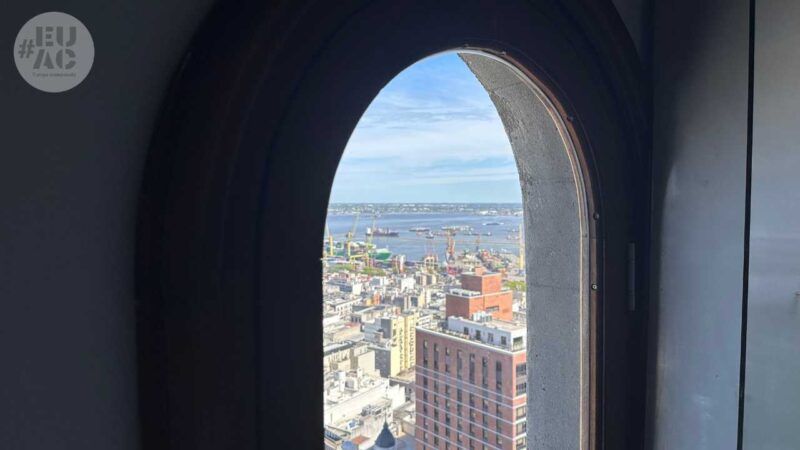
The Intendencia building houses one of the city’s best viewpoints. From its terrace, you can enjoy panoramic views of the city center, the bay, and much of the coastline. It’s a brief but highly recommended stop to get a complete overview of the city from above. IMM Panoramic Viewpoint Website
Juan Pedro Fabini Square (El Entrevero)
Just steps from the viewpoint is this plaza with the sculpture “El Entrevero” by José Belloni. It’s a central and busy space, ideal for sitting for a moment or continuing your walk towards the more commercial side of the avenue.
Lunch at La Pasiva
As a classic Montevideo experience, a good option for lunch in the area is La Pasiva, known for its hot dogs with special mustard or its “chivito” (steak sandwich) and for being a traditional spot in the Center.
Punta Carretas Shopping
In the afternoon, you can continue on to Punta Carretas, one of the city’s most well-maintained neighborhoods. The shopping center is housed in a restored former prison, giving it a unique character. It’s a great place to relax, buy something, or have a coffee before continuing your tour.
Visit to the Salvo Palace (if it is Saturday)
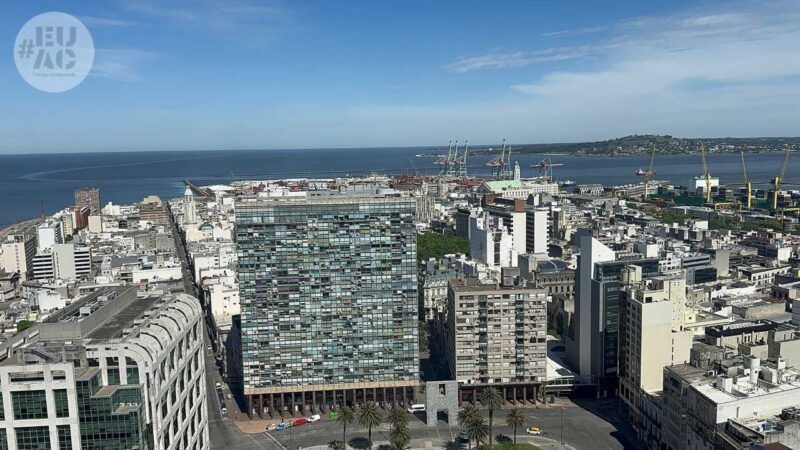
If this day falls on a Saturday, you can either replace the fair or add the guided tour of the Palacio Salvo, offered that day, to your afternoon visit. The tour allows you to learn about its history and go up to the upper floors for unique views of Plaza Independencia and its surroundings.
It’s a highly recommended visit. Book tickets for the guided tour
DAY 3 – Prado District: parks, museums and historical architecture
For this third day, we ventured away from the city center and visited the Prado neighborhood, one of Montevideo’s greenest and most traditional areas. It’s a leisurely stroll through parks, past historic mansions, and past various cultural landmarks.
Church of the Carmelites
Neo-Gothic temple declared a National Historic Monument, known for its tall towers and stained glass windows.
Monument to the Stagecoach
Sculpture by José Belloni, inaugurated in 1952, representing a stagecoach pulled by six horses in full motion.
Prado Rose Garden
Historic garden from 1912 with flower arches, pathways and a central fountain, inspired by European parks.
Atilio Lombardo Botanical Garden
A space inaugurated in 1902 with more than 1,000 plant species, trails and a small Botanical Museum.
Museo Juan Manuel Blanes
Housed in a 19th-century neoclassical mansion, this museum is dedicated to the painter Blanes and to Argentine art. Admission is free. Visit the Blanes Museum website.
Behind the museum lies the Japanese Garden, a tranquil space with bridges, ponds, and traditional design.
DAY 4 – Old City: history, museums and architecture
This fourth day is dedicated entirely to the Old City, Montevideo’s historic center. It’s ideal for exploring at a leisurely pace, as it’s home to plazas, museums, colonial buildings, and some of the city’s most iconic landmarks. The best way to start is with a free walking tour, which usually departs from Plaza Independencia, and then continue exploring on your own.
Plaza Zabala
One of the most traditional spaces in the Old City. Inaugurated in 1890 and designed in the French style, it is located on the site of the former colonial governor’s office. At its center stands the equestrian statue of Bruno Mauricio de Zabala, the founder of Montevideo.
Taranco Palace – Museum of Decorative Arts
Facing the square is this elegant early 20th-century palace, built by French architects. Today it functions as a museum and houses furniture, porcelain, sculptures, and decorative objects in the European style. Admission is free. Museum website
Lavalleja House
Just steps away, this colonial mansion—the former home of caudillo Juan Antonio Lavalleja—offers a glimpse into 19th-century life. Its rooms and antique kitchen showcase the daily routine of the era. Admission is free. Museum website
Rivera House
Nearby, this colonial building once belonged to General Fructuoso Rivera, Uruguay’s first president. It houses rooms of the National Historical Museum that explore different stages of the country’s political and cultural history. Free admission. Museum website
Sarandí Pedestrian Street
The walk towards Plaza Matriz takes you along the pedestrian street, a promenade lined with galleries, bookstores, cafes, and heritage buildings. It’s one of the cultural hubs of the Old City.
Matriz Square and Old City Hall of Montevideo
In Plaza Matriz, the colonial heart of the city, stands the Cabildo. Today it functions as a museum with documents, artifacts, and rooms dedicated to Uruguay’s colonial and independence history. Admission is free.
Andes 1972 Museum
Located 100 meters from the Cabildo, on Rincón Street, this museum displays artifacts, photographs, and testimonies from the 1972 plane crash in the Andes. A brief but powerful visit. Ticket reservation for the Andes Museum 1972
Solís Theatre
Facing Plaza Independencia, the Solís Theatre is Montevideo’s main cultural icon. Opened in 1856, it offers guided tours of its halls, boxes, and history. It is one of the country’s most emblematic buildings. Solís Theatre website
Estévez Palace
Next to the Solís Theatre, this 19th-century neoclassical building houses the Government House Museum. It contains presidential furniture, portraits, and documents. Free admission. Website of the Government House Museum
Football Museum – Centenario Stadium
Further from the historic center, but still included in your itinerary, is this museum inside the Centenario Stadium. Explore the history of Uruguayan football with trophies, jerseys, and historical artifacts. Football Museum website
DAY 5 – Rambla, neighborhoods and optional excursions
For the last day we left several alternatives, from a coastal tour to walks through distant neighborhoods or getaways outside of Montevideo.
Rambla towards Canelones
A coastal promenade passing by various beaches and green spaces. A great option is a guided bike tour that covers part of the Old City and the Rambla.
Rodó Park
A green lung with gardens, a lake, and an amusement park.
Fishermen’s Promenade
Simple and traditional viewpoint next to the Río de la Plata, overlooking Ramírez beach.
Plaza Virgilio – Punta Gorda
Viewpoint with one of the widest panoramic views of Montevideo.
Carrasco and Hotel Casino Carrasco (Sofitel)
Historic building from 1921, an icon of the old Carrasco resort.
Other routes:
Montevideo Hill
18th-century fortress and the best panoramic viewpoint in the city.
Sanctuary of Cerrito de la Victoria
An emblematic church whose dome dominates the Montevideo landscape.
Colón and Villa Colón
Historic neighborhoods with mansions, squares and buildings such as the Colegio Pío or the Castillo Idiarte Borda.
Bouza Winery – Rincón de Melilla
Guided tour, vineyards, tasting, and restaurant in a rural setting near the city. This is a highly recommended outing if you love wine and nature. Visit to Bouza Winery
Full-day excursions
Tours to Punta del Este or Colonia del Sacramento to make the most of your last day. I’ve included Turismouy’s contact information for tours.
Download the Montevideo guide
Here’s a quick guide with a selection of restaurants, hotels, activities, and a map of Montevideo.
NOTE: The information in this article is based on our own experience and is completely objective. This article contains affiliate links.