Today we start the day in Valle de Uco and head towards Tupungato, then take Routes 82 and 7.
We would travel the route to Uspallata slowly, enjoying the scenery on one side and taking reasonable care on the other, as it is a road with a lot of truck traffic.
We did this route on our own by car, but if you prefer, you can take the high-mountain route on an excursion from Mendoza.
Indice:
Cacheuta and Potrerillos
But today, first things first, Potrerillos awaited us, along the way the Cacheuta Bridge and the hot springs.
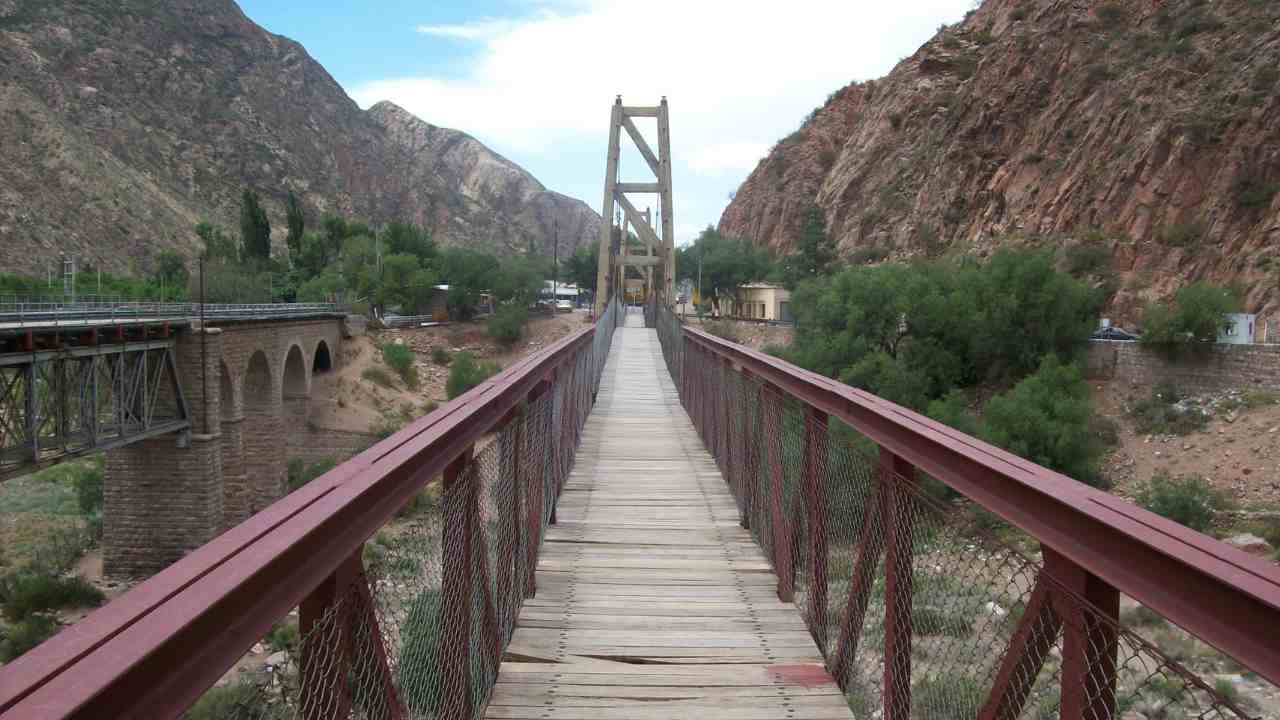
We take Route 82 and before reaching Potrerillos we find the Cacheuta Hot Springs and the suspension bridge.
These hot springs are located in the heart of the mountain range, less than an hour from the city of Mendoza, and the first thing that strikes you is the surroundings: mountains, river, and fresh air. The water comes directly from the mountains, hot and loaded with minerals.
Excursion to the Cacheuta hot springs
The Cacheuta Suspension Bridge was inaugurated in 1952 to connect the Trans-Andean train station with the working-class neighborhood across the river. Today, its nearly 140 meters in length still invite visitors to cross it, with the mountainous landscape as a backdrop.
But we continued on our way to the Potrerillos reservoir.
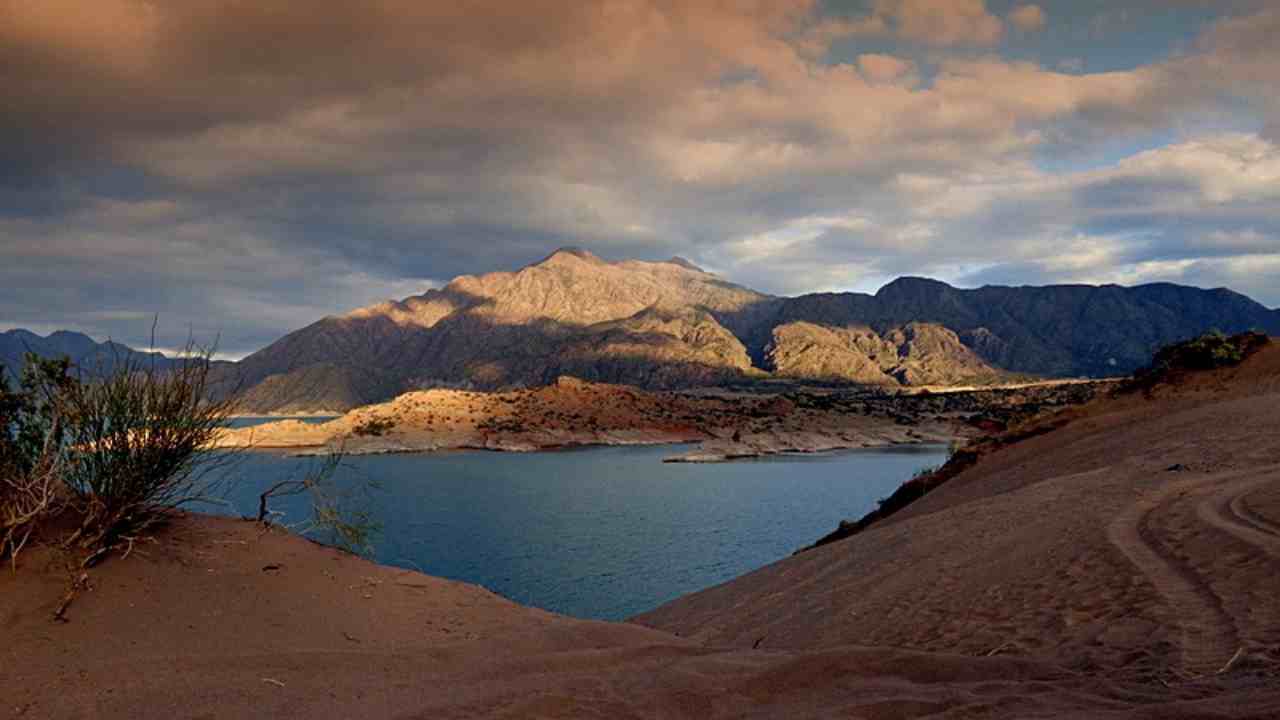
In the majesty of a 12km long and almost 3km wide reservoir, its turquoise waters reflect the Andean foothills.
It’s truly impressive to arrive here; the route suddenly reveals a dreamlike landscape, with colors that seem to have been perfectly chosen.
Excursion to Potrerillos and Cacheuta
The town of Potrerillos was born as a summer resort, surrounded by rural farms, and flourished after the construction of the dam, which regulated the Blanco and Mendoza rivers and generated vital hydroelectric power for the region.
Uspallata
After enjoying these landscapes, we returned to the road to reach Uspallata as our destination for the first day. We would now take Route 7, a route we would continue tomorrow as well.
We arrived at Uspallata, a small mountain town that serves as a gateway to the Andes mountain range.
Surrounded by breathtaking landscapes, it’s an ideal place to relax and explore nature in its purest state. Its main attractions include the Uspallata Vaults, colonial buildings that formed part of the Camino Real (Royal Road), and the Seven Colors Hill, which offers unforgettable views.
Some cabins awaited us about 5 kilometers from the center. The Naol cabins were great. We had a total of two nights here.
Dawn was breaking in Uspallata. The place had seemed beautiful to us in the afternoon, but in the morning it was dreamy, with a tranquility that I believe transcends the camera, a natural paradise.
We took the route, starting in Uspallata, to take this high-mountain road to the Chilean border. Traveling along National Route 7 from Uspallata to Los Caracoles, on the Chilean side, is an experience that combines majestic landscapes, history, and excitement.
Los Penitentes and Puente del Inca
Punta de Vacas was the first point we passed through, until we reached Los Penitentes.
Located 170 km from the city of Mendoza, Los Penitentes is a mountainous area that invites you to stop and enjoy the scenery at any time of year. Its name comes from some unusual rock formations that, seen from a distance, resemble a group of hooded monks walking.
For decades, Los Penitentes was one of Argentina’s most famous ski resorts. Although the resort is currently closed to the public for traditional winter activities, the site retains its infrastructure and continues to be a point of interest for travelers traveling along National Route 7..
The following is an essential stop on this route and this tour through the mountain range
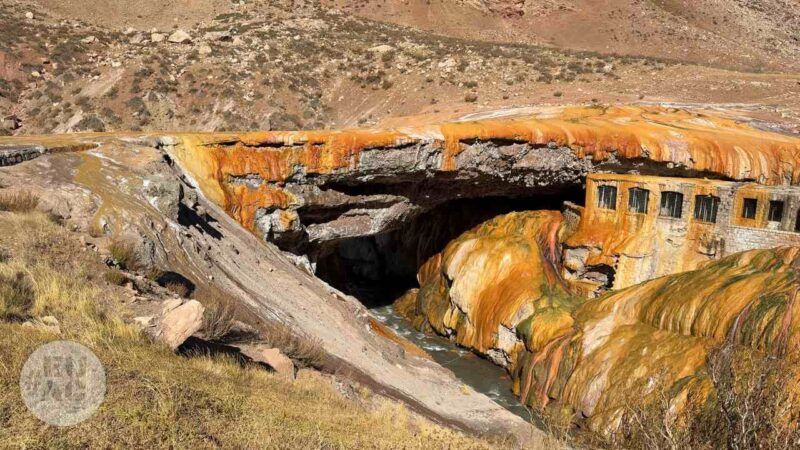
About 25 km from Los Penitentes is Puente del Inca, a natural rock and sulfur formation that forms a bridge over the Las Cuevas River. A thermal hotel operated here in the early 20th century, now in ruins but with a nostalgic charm. This is an ideal spot to stop, take photos, and visit the small crafts center.
You can take this high-mountain tour from the city of Mendoza on a day trip if you don’t have a car or don’t want to drive. Or rent a car so you have the freedom to stop whenever you want on this high-mountain tour in Mendoza. I highly recommend taking it because it’s simply wonderful.
This highway connecting Argentina with Chile is often closed in winter due to heavy snowfall. Stopping at a stop like Uspallata is ideal for finding out when it opens and being able to cross.
Aconcagua Provincial Park
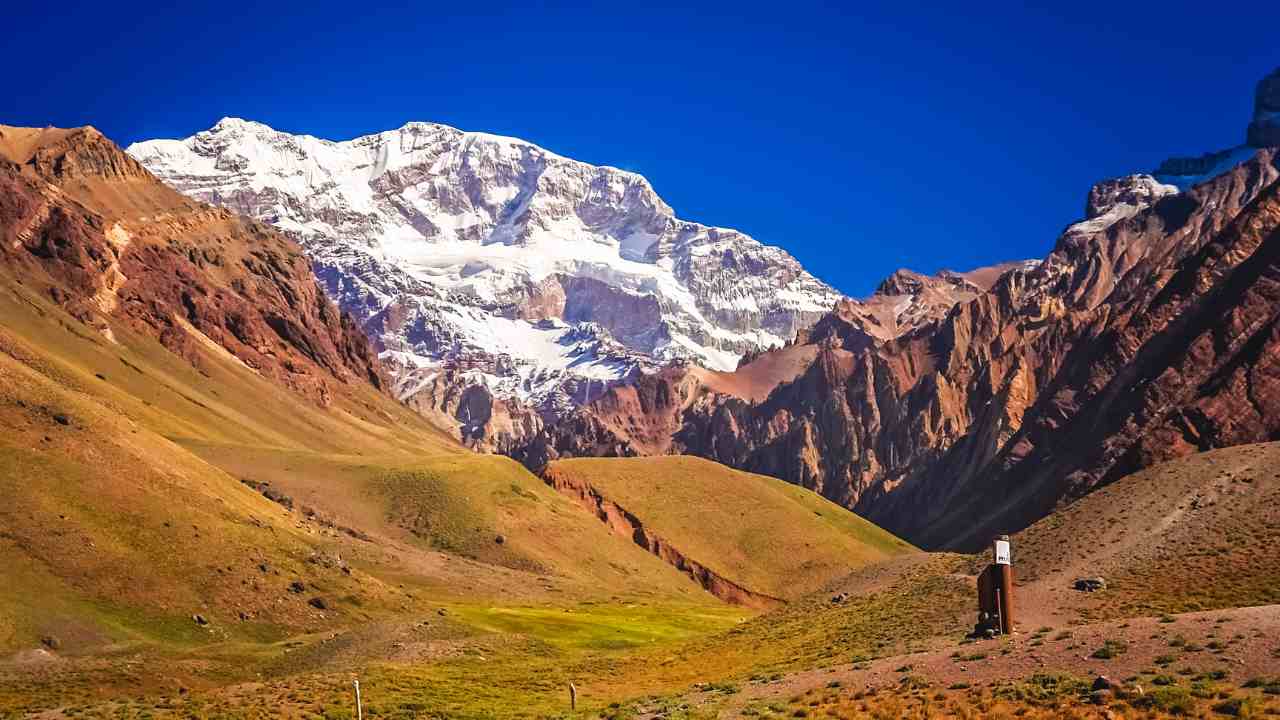
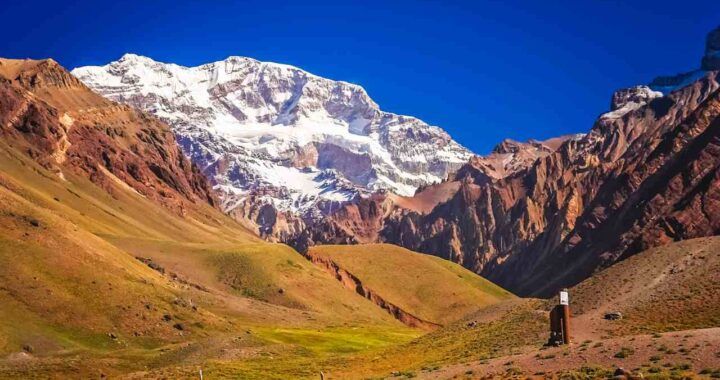
A few kilometers further on is the Provincial Park, with its viewpoint offering a unique view of Aconcagua, the highest peak in the Americas (6,962 m). From here, you can take easy hikes to Horcones Lagoon, with interpretive trails and majestic views of the Andean surroundings.
Excursion to Aconcagua Provincial Park
The viewpoint is only about 400 meters away and is easily accessible. However, if you want to hike the trail, you must register at the station next to the trailhead. Aconcagua Provincial Park website
Throughout this trip through Argentina, we were always connected to the Holafly Argentina eSIMS. Here’s a discount code: EUROPAACOMPANADA5
Las Cuevas and border crossing
As you ascend toward the border, you reach the small town of Las Cuevas, the last Argentine point before the international tunnel. From here, you can climb (weather permitting and during the summer) to Christ the Redeemer of the Andes, a monument at 3,832 meters high that symbolizes peace between Argentina and Chile.
We left it for the return trip; now we wanted to cross the border to see the so-called Caracoles, the zigzag route that leads down the mountain.
The border is crossed through the Cristo Redentor Tunnel, which connects both countries at 3,200 meters above sea level. Border control was slower than expected.
Los Caracoles (Chile) and Cristo Redentor de los Andes
Once in Chilean territory, the legendary Los Caracoles section begins, a series of more than 20 hairpin bends that descend steeply toward the Aconcagua Valley. From the top, you get unparalleled views of the route, and in winter, it’s common to see trucks and vehicles moving slowly through the snow.
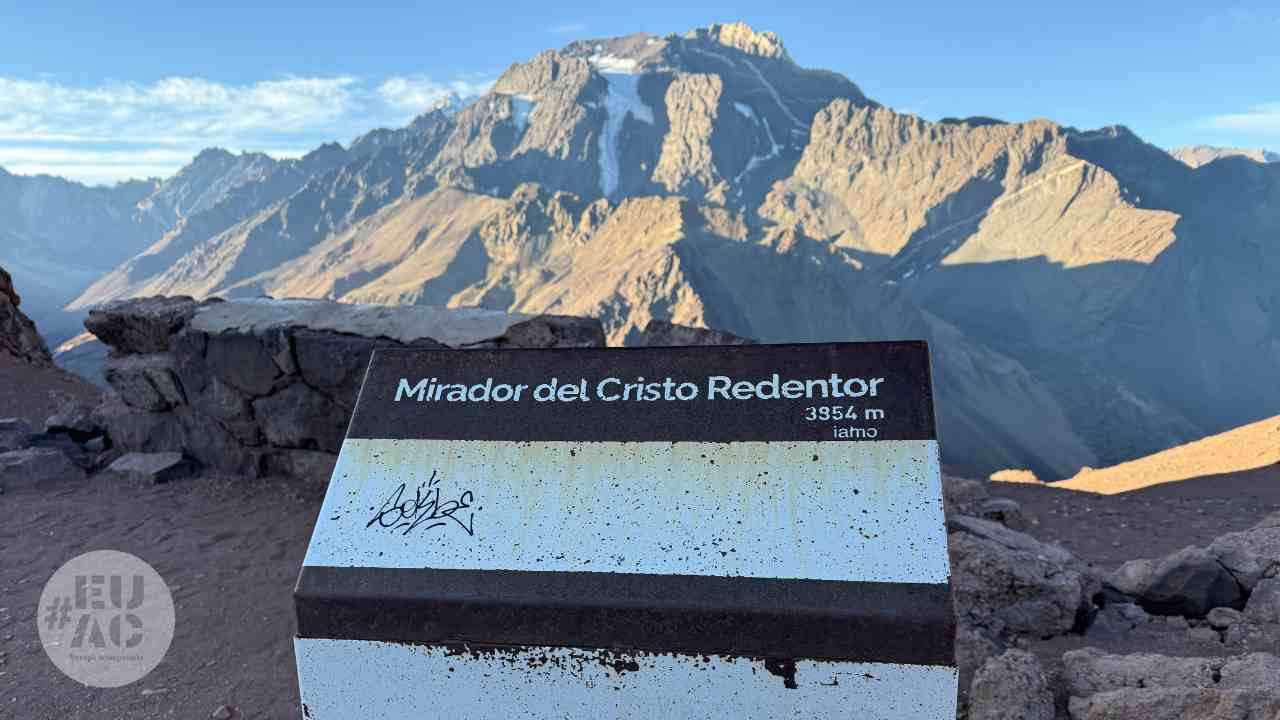
After enjoying this wonder, we returned to Argentine customs. Another wait, but this time it was much faster, and we were finally going to climb Christ the Redeemer statue in Las Cuevas, Argentina.
High mountain excursion in Mendoza in a small group
Amidst high-altitude landscapes and mountain winds, from the small town of Las Cuevas, one of the most astonishing stretches of the high mountains begins: the ascent to Christ the Redeemer of the Andes, a monument steeped in history and symbolism, located more than 3,800 meters above sea level.
The climb begins at a signposted turnoff from National Route 7, just before reaching the international tunnel. The gravel road, with many hairpin bends, ascends for about 9 km through landscapes of bare rock, eternal snow (depending on the season), and a profound silence interrupted only by the wind.
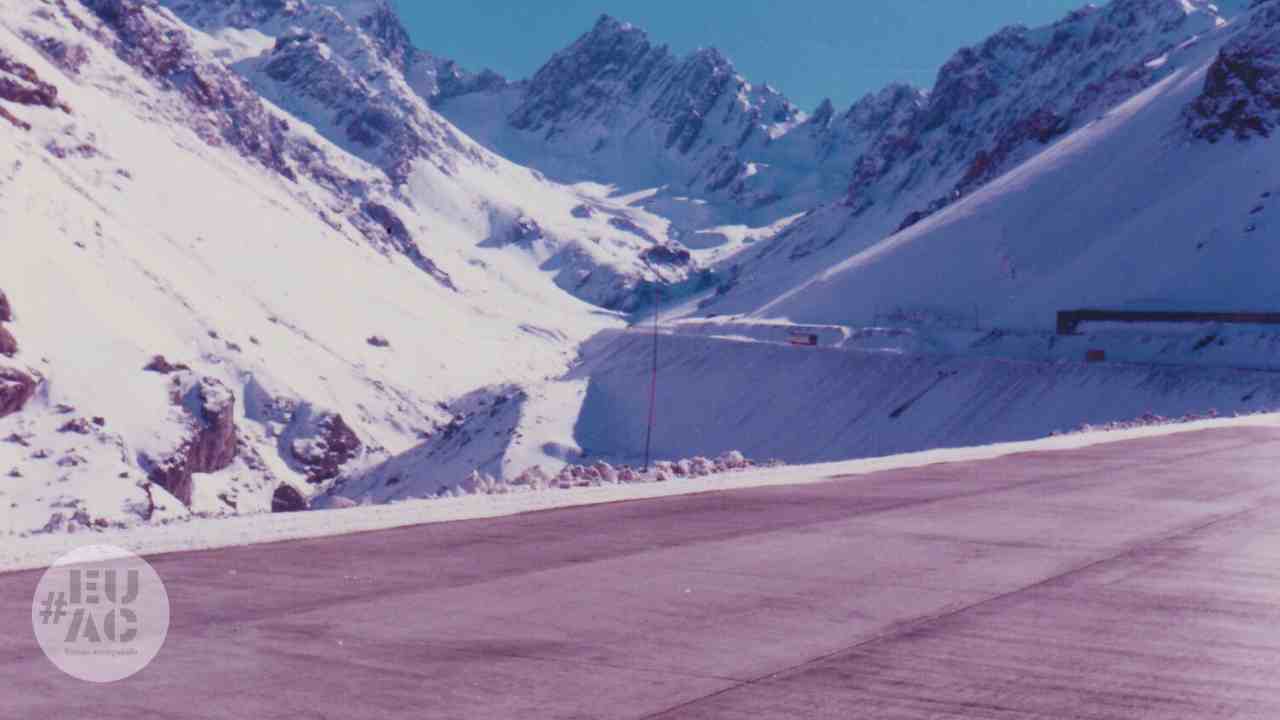
This route is only open during the off-season of snow, as it is often covered in snow and impassable in winter.
At the top of the hill, at 3,832 meters above sea level, stands the statue of Christ the Redeemer of the Andes, inaugurated in 1904 as a symbol of peace between Argentina and Chile, following a long history of border tensions that, at that time, were resolved through diplomacy.
The 7-meter-high monument, mounted on a stone base, was carried piece by piece on muleback. Today, from this vantage point, there are panoramic views.
Before the construction of the Christ the Redeemer Tunnel (inaugurated in 1980), the climb to the monument was the official border crossing between Argentina and Chile. The original road, known as the Camino del Bermejo or the Camino del Inca (due to its proximity to ancient Andean trails), was used by travelers, muleteers, and armies since colonial times.
For much of the 20th century, this road was the only passable vehicle route in the summer, albeit with difficulty. Therefore, crossing the mountain range was an adventure that depended on the weather and the condition of the road. With the arrival of the modern tunnel, the pass became more accessible and faster, and the old road to El Cristo was reserved for tourist visits.
On the Chilean side, the original road leading to Christ the Redeemer descended into the Aconcagua River valley, connecting with the Juncal sector and then with Route CH-60, which descends toward Los Caracoles. Currently, access is only available from the Argentine side, that is, by ascending from Las Cuevas and returning along the same route. On the Chilean side: The old road that descended toward Chile is no longer operational for normal traffic. The area is no longer maintained as a public road, but some access is possible by all-terrain vehicles or motorcycles.
We descended and returned to our cabins in Uspallata to finish our high mountain tour of Mendoza, which had begun in Mendoza City.
High mountain video tour
NOTE: The information in this article is based on our own experience and is completely objective. This article contains affiliate links.