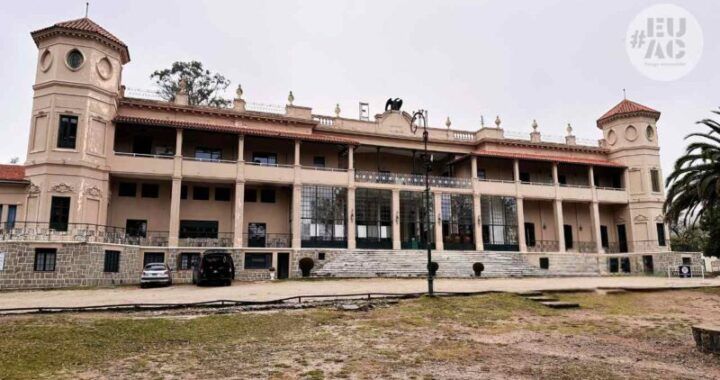
Visiting Piriápolis in Uruguay.
Uruguay
With just over 176,000 km² and a population of 3,500,000 inhabitants, this country located in South America will welcome you with gently rolling terrain and many kilometres of coastline.
Enjoying its nature today, we are going to discover a very particular spa: Piriápolis.
Indice:
Piriápolis
Located in the department of Maldonado, in the east of the country and almost at the mouth of the Río de la Plata on the Atlantic Ocean, we find this city designed by Francisco Piria and inspired by European resorts, Piriápolis was the first resort city in Uruguay.
Just 98 km from Montevideo and 38 km from Punta del Este, between hills and beaches, this city is a gem to discover, both for relaxation and to delve into the history of its founder, the alchemist Francisco Piria and the amount of alchemical and Masonic symbolism in the area.
Its beaches and those of the surrounding resorts are located along a 25 km strip between Arroyo Solís and Punta Negra, and each summer they receive thousands of Uruguayan and foreign tourists who seek, in addition to the natural attractions, the halo of tranquility and mysticism that the area enjoys.


Pittamiglio Castle
Speaking of mysticism, our first stop will be at Pittamiglio Castle. Located north of the Las Flores resort, on Route 71, it was built by architect Humberto Pittamiglio as a summer residence.
Entrance to the large open garden is free. Entrance to the interactive multimedia museum does have a cost of $120 (approximately US$3). The exhibition tells the story of Pittamiglio’s life and his connection to alchemy.

To enter the museum, you must follow the health protocols, and you can enter in very small groups. It is open from 9 a.m. to 5 p.m., except on Tuesdays.
Visiting the castle is like entering a place full of symbolism. Pittamiglio, like Piria, was a person who has been associated with alchemy. A good place to start discovering the history of Piriápolis, Uruguay.
The history of Piriapolis
What were the beginnings of this spa?
In 1889, Francisco Piria settled in the area, buying several hectares from the Pan de Azúcar hill to the sea, and dedicated himself to planting vines, olive groves and tobacco.
An idea had come to his mind after his travels around Europe: to create a European-style seaside resort in this area.
He began to build his residence, the famous Piria castle, and in the meantime he settled next door, in what had once been a military post. From here he managed his plantations, construction, and gave shape to a dream, the resort that he wanted to call El Provenir.
This old military post was built by the Spanish in the 18th century and over the years was owned by Piria. Today it is private property and we can only see it from the outside. Its name? La Quebrada del Castillo.

►Free Tour of Piriápolis, join the tour and get to know this city with a guide
Piria Castle
Just a few meters further on, on Route 37, we find Piria Castle. It was completed in 1897 and was, as we said, the residence of Francisco Piria.
Many of the objects used in the castle’s decoration were brought by Piria from different parts of the world. An example of these are the terracotta dogs, with a backpack and free between their paws, which are placed at the entrance, were brought from Italy.
He also brought plants from his garden from other places, so we found some dragon trees from the Canary Islands. Admission is free.

Next to the castle you can see what looks like a ruined village, it is the Andalusian Village. The so-called Andalusian Village was created as a set in 1994 from existing buildings such as the castle’s stables. The set was set up to film El Curro Giménez, the Spanish series, in its last season “Curro Giménez, the return of a legend”.
Many people worked on it, the set was installed, the furniture and everything related to the filming, but it was dismantled when the filming was over. From then on, it was just abandoned, a shame.
Pan de Azúcar Hill Wildlife Reserve
This whole area in Uruguay, Piriápolis and its surroundings, is a place worth exploring. If we continue a few kilometres further, we come across the Cerro Pan de Azúcar Breeding Station and Wildlife Reserve, the former Piria quarry from which granite rock was extracted for the construction of the spa. Even today there are vestiges of this activity on the hill.
The breeding station was created in 1980 and has an educational purpose, but is recognized for its work in safeguarding animals in danger of extinction.
We find it at the foot of the aforementioned Cerro Pan de Azúcar, which can be climbed and the cross built on its summit can be climbed. This cross was built in 1933, is 35 meters high, and a spiral staircase leads up to its arms.

If we continue this route, moving further away from the sea, we will end up in the city of Pan de Azúcar.
But we turn back and stop at a mysterious abandoned church.
The church of Piria
On the same route 37 and just 2 kilometers from Piriápolis we see this silhouette that emerges with an aura of mystery, the church of Piria.
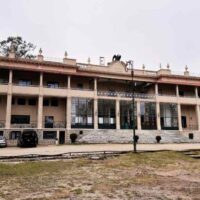
Construction began on Piria’s orders in 1917, but it remained unfinished. The church rejected this building because they saw in it Masonic and alchemical symbols. Thus, Francisco Piria’s work remained unfinished and did not achieve the purpose for which it had been designed. After Piria’s death, it was abandoned and remains that way to this day.
In any case, entering it, beyond its abandonment, has a certain charm, and the photos taken from inside have a certain magic.

Piriápolis Railway and Port
The Piriápolis railway was also built by Piria in 1907. It ran from the foot of Cerro Pan de Azúcar, with the aim of transporting granite stones from the quarry to the new constructions.
In 1913, the railway line was extended to take Montevideo tourists arriving at the Pan de Azúcar station to the Gran Hotel Piriápolis, which had been inaugurated in 1905.

The Port of Piriápolis began to be built in 1907 and was officially inaugurated in 1916. Argentine tourists arrived at the Port on the Steamboat of the Race, and the train line also took them to the hotel.

The Piriápolis railway line ran until 1958, but the resort unfortunately lost its appeal.
Over the years, the Buquebus company made the journey by sea from Buenos Aires to the Port of Piriápolis between 1998 and 2003, although its return is announced soon.
Grand Hotel Piriapolis
As we said, the hotel built by Piria, the Gran Hotel Piriápolis, was inaugurated in 1905.

The hotel had hot water sea baths as a major attraction, and had silver tableware and German porcelain.
Today, the Gran Hotel Piriápolis is a holiday camp for Primary Education in Uruguay, and is therefore not open to the general public.
For the curious eye, on the steps at the side of the hotel, despite their deterioration, you can see the original granite steps, and vestiges of the original sidewalk with various designs such as Templar crosses or roses.

I’ll make a parenthesis here. A novel to recommend, “Murder in the Hotel de Baños” written in 1992 by Juan Grompone, when this novel set in Piriápolis, more precisely in the Gran Hotel Piriápolis, came to my attention, I began to be interested in the history of Piria, and the symbolism of the city, which is revealed as the plot of the novel develops, I recommend it to you.
Argentine Hotel in Piriapolis
If we only turn, on this tour that we are doing through Piriápolis, Uruguay, we will find the most emblematic construction of the city, the Argentino Hotel de Piriápolis.
The Argentino Hotel in Piriápolis was built in the image and likeness of the hotels of the European Riviera, also by Francisco Piria, and it was inaugurated in 1930. Francisco Piria imported the best from Europe for his facilities, and for many years it was the largest hotel in South America. Even today it welcomes guests in all its majesty.

The lobby can be visited regularly, and you can see its staircase and stained glass windows. It also has an exhibition about the history of the hotel and the spa.

Staying at the Argentino hotel
Find all hotels in Piriápolis, Uruguay
The trilogy of sources
Francisco Piria also thought of providing the spa with other attractions, and that is how we find the trilogy of fountains.
The first of these is the Ducks’ Grotto fountain, located on the way up to the fishermen’s virgin, Stella Maris. The Stella Maris statue can be reached either by road (on the way up to San Antonio Hill) or by steps. If you go up the stairs you will find a fountain, the Ducks’ Grotto, the first fountain in the trilogy.


The other fountain is found on the way up to Cerro del Toro, and has the same name, Fuente del Toro. Piria brought the sculpture of the bull from Paris, and the fountain was inaugurated in 1911. Two staircases, one on each side, with 33 steps, provide access to it.

The other fountain is the Fountain of Venus. Also inaugurated in 1911, it is an exact replica of the Greek temple that exists in Villa Parvicini in Italy.

San Antonio Hill
This is the most popular walk in Piriápolis, climbing the San Antonio hill. At the top you will find the San Antonio temple, several souvenir shops, chairlifts and… the best view of the resort. You can go up by road, by chairlift, or also on foot, by steps to Stella Maris and then continue along the road.

Those who have not yet visited this Uruguayan resort will have seen that it has a lot to offer: many beaches, some in the centre and some further away, and a good tour following in the footsteps of Francisco Piria and the symbols spread throughout this city.
Or… a visit to Colonia del Sacramento
From Montevideo you have organized tours that make this visit for the day, it is something worth doing.
Did you see our post about Punta del Este?
EXTRAS: Map and video
Booking.comNOTE: The information in this article is based on our own experience, being totally objective. This article contains affiliate links.