

Located in Romania and its capital, Bucharest, today we’ll explore what else it has to offer and what we can do in three days. What to see in Bucharest.
Bucharest is a mix of beautiful period buildings, a slight deterioration as it’s undergoing restoration, and the atmosphere of small bars and cafes—a mix that, at least, didn’t go unnoticed by me, but rather captivated me.
The official currency of Romania is the Romanian leu, identified by the acronym RON. One euro is equivalent to approximately 5 lei, which makes it easy to convert when traveling. We used credit cards, but while they are accepted in most places, there are several where they are not, so I recommend carrying some cash.
Indice:
Day 1: What to see in Bucharest
We will depart from our hotel, located in the historic center, towards the first point….
Cărturești Carusel Bookstore.
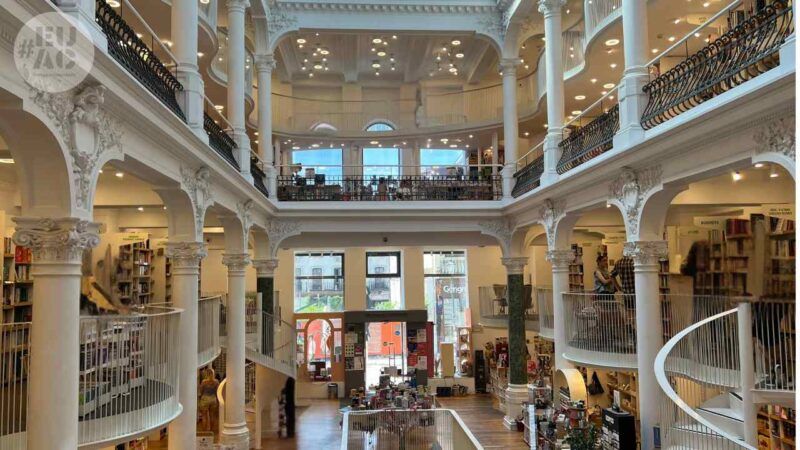
In the heart of the Old Town is Cărturești Carusel, a very pretty bookstore, which I think is a must-see on any visit to Bucharest. Admission is free. Its 19th-century architecture, with white columns and curved balconies, creates a magical atmosphere. In addition to books, there is a café on the top floor with views of the interior.
Cărturești Carusel occupies a 19th-century building that once belonged to a banking family. During the communist era, it housed a major department store and was only transformed into the current bookstore in 2015. Today, it combines history and culture in one of Bucharest’s most photogenic spaces.
Our steps begin a beautiful walk, which will take us past beautiful buildings, as we head toward another must-see in Bucharest, the Stavropoleos Monastery.
Stavropoleos Monastery
The Stavropoleos Monastery was built in 1724. It was originally part of an inn in the Old Town. In 17th and 18th-century Bucharest, inns were large walled complexes that combined lodging, warehouses, and commercial spaces. They served as refuge for merchants and travelers, and also as centers of economic life in the city. Within the inn grounds, the church and a monastery were built, which was financially supported by the inn’s income (a relatively common situation at that time). Many of them disappeared, but Stavropoleos continues to function as an Orthodox church today, and admission is free, making it one of Bucharest’s most accessible gems.
Free Tour of Bucharest
I’ll give you a list of things to see in Bucharest, based on the proximity of the attractions, but what I think is an excellent option is to take a free tour of Bucharest. We did it on our first day, and it was one of the best free tours we’ve ever taken. Our guide, Lavi, was an excellent host. She showed us her city, told us how it’s slowly being restored, and we imagined, as we wandered through its streets, that in a few years it will look different, more beautiful. But today it looks authentic, with a mix that gives it a very interesting touch, and with a diminished number of tourists, which makes it seem strange to those of us who travel the world dodging crowds, and which of course has its charm.
Caru’ cu Bere
Caru’ cu Bere opened in 1879 and is one of the oldest restaurants in Bucharest. Its neo-Gothic interior, with stained-glass windows and murals, makes it a Bucharest attraction in itself. Today, it continues to operate as a brewery and a traditional spot for Romanian cuisine. At the end of the video, we’ll show you how our dinner went and the prices. Caru Cu’ Bere restaurant website
CEC Palace

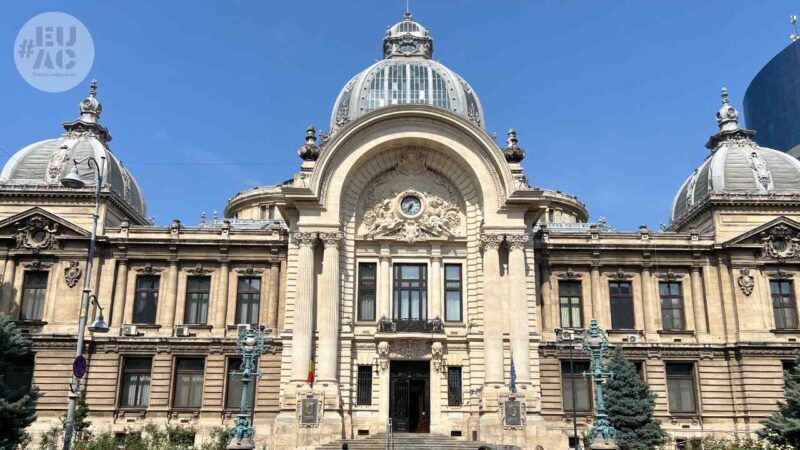
We arrived at this building, which is my favorite in Bucharest. Seeing it reminds you of Paris, right? We arrived at the CEC Palace.
The CEC Palace was opened in 1900 as the headquarters of the Romanian Savings Bank. Its façade and large glass dome made it one of the city’s most elegant buildings. Today, it is still the bank’s headquarters. Although the interior is not open to visitors, its exterior is one of the most photographed in Bucharest and a must-see in Bucharest.
To follow this route, to check schedules, to use the map to confirm the free tour, we need to be connected to mobile data at all times. Not to mention, to be able to upload those stories instantly to share with friends and family, and not have to worry about how many gigabytes we’re using, the ideal is to have unlimited internet.
We, like on all our trips, use Holafly eSIMs because they offer unlimited internet, you can share them with another mobile device, and you can customize the number of days you need them for. That is, if you want them for three days, you don’t need to get a one-week plan, for example. You can choose three days.
In this case, for your visit to Bucharest, you can choose the Romanian eSIM, or if you’re traveling to other European countries, you can choose the European eSIM, such as neighboring Bulgaria. Check the specifications to see which countries have coverage with these regional eSIMs. Also, make sure your phone supports eSIM technology and is unlocked by your carrier. Then, go ahead. I’ll give you a discount coupon for your purchase: EUROPAACOMPANÑADA5. And enjoy unlimited internet for your travel days. !!
National History Museum of Romania
Almost opposite is the National History Museum of Romania. We only admired its facade, which is very beautiful, but didn’t go in. The entrance fee is 20 lei (approximately €4). Website of the National History Museum of Romania
Victoria Street
Victoria Street, or Calea Victoriei, is Bucharest’s most elegant avenue. It originated in the 17th century as a thoroughfare connecting the city center with the former royal palace and, over time, was filled with palaces, hotels, and theaters. Today, it’s a must-see for exploring the city’s architecture and cultural life.
Zlătari Church
The Zlătari Church was built in the 18th century, in the area where Bucharest’s goldsmiths worked. It preserves frescoes and gilded details and remains today an active Orthodox church in the heart of the city..
Macca Vilacrosse Passage
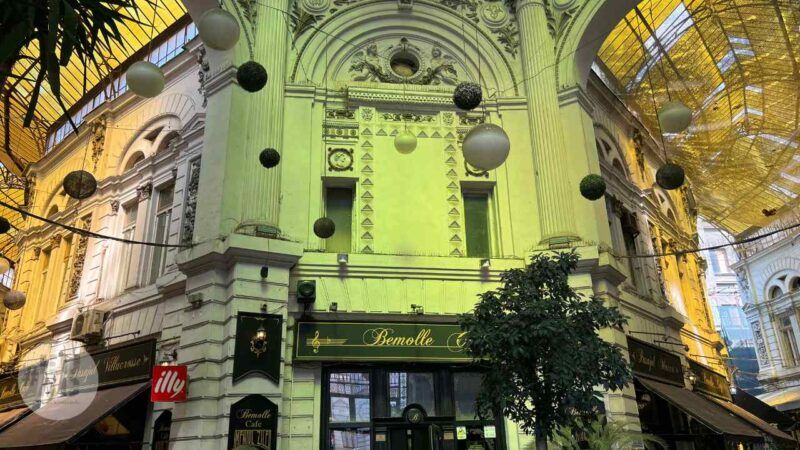
If we continue along this same street, we’ll reach the entrance to the Macca-Vilacrosse Passage, another must-see in Bucharest. The Macca-Vilacrosse Passage was opened at the end of the 19th century as a shopping arcade.
Covered with a horseshoe-shaped glass roof, it connects Calea Victoriei with Calea Lipscani. Today, it houses cafes and bars with a bohemian atmosphere, frequented by both locals and tourists. Although it isn’t as well-maintained as it deserves, it reminds us a lot of Parisian alleyways. The Macca Vilacrosse alleyway is something I recommend seeing on this route of things to see in Bucharest.
Upon reaching the intersection of Victoria Street and Regina Elizabeta Boulevard, we made a short detour to visit University Square.
University Square
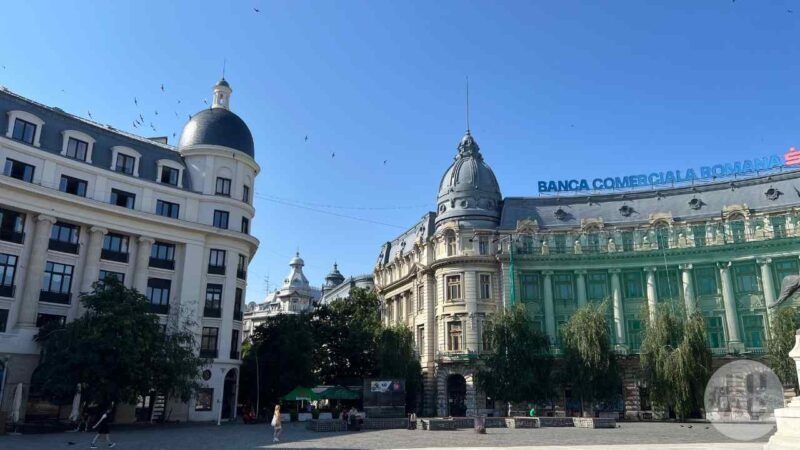
University Square is one of Bucharest’s key landmarks. It’s surrounded by iconic buildings like the University of Bucharest, the National Theater, and the Intercontinental Hotel. At its center are four statues of important figures in Romanian history. I think it’s also a must-see on a visit to the city.
Odeon Theatre
Now we return to Victoria Street and, standing still, we can admire a series of beautiful buildings, including the National Military Center. The National Military Club, opened in 1912, is an imposing neoclassical building on Calea Victoriei. Today it serves as a cultural center and events venue, although its most admired feature is its elegant facade.
We continue admiring buildings and now we head to the Odeon Theater. The Odeon Theater opened in 1911 and is one of Bucharest’s most prestigious theaters. Its neoclassical-style building, with an Italian-style auditorium, has been preserved as a cultural symbol on Calea Victoriei.
In front of the Odeon Theatre stands the statue of Mustafa Kemal Atatürk, the founder of modern Turkey. It was erected in 2003 as a symbol of friendship between Romania and Türkiye.
Victoria Passage
The hour passed, and it was time to stop for something to eat. Very close by, almost next door, there’s another passageway, so that’s where we headed: Victoria Passage. (In Google Maps, set it to Umbrella’s Street, otherwise it’ll send you to another part of the city, to a tunnel in an avenue.)
Bucharest’s Umbrella Street is a modern art installation: a small street covered in colorful umbrellas. It has no historical context, but it has become very popular on social media and is one of the most photogenic spots in Bucharest’s Old Town.
Revolution Square
We arrived at Revolution Square, a key site in Romania’s recent history. Revolution Square was the scene of the December 1989 demonstrations that ended Nicolae Ceaușescu’s communist dictatorship. That’s why today it is a place of remembrance and a symbol of freedom in Bucharest.
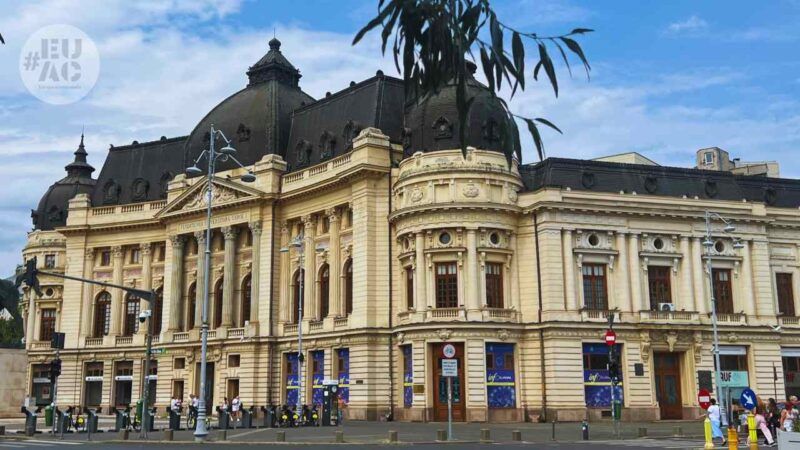
Surrounding it are iconic buildings such as the Central University Library, the Kretzulescu Church, the former Royal Palace, and the Romanian Athenaeum. This architectural ensemble epitomizes Bucharest’s cultural and political history.
Here we visited some of its buildings, first the Kretzulescu Church, then the Royal Palace.
National Museum of Art of Romania
The former Royal Palace, the residence of the Romanian monarchs until 1947, now houses the National Museum of Art of Romania. You’ll find collections ranging from medieval Romanian art to European works by great masters. Admission is 30 ROM, about €6. Free admission on the first Tuesday of every month. If you’re a big art lover, this is a must-visit; if not, skip it. Website of the National Museum of Art of Romania
Romanian Athenaeum
The other place we went to, and luckily, I recommend it to you, is the Romanian Athenaeum.
The Romanian Athenaeum is Bucharest’s great cultural symbol. Inaugurated in 1888 thanks to a public collection under the slogan “Give a leu for the Athenaeum,” it combines an elegant neoclassical style with a circular hall decorated with a fresco summarizing Romanian history.
Today, it remains the home of the George Enescu Philharmonic and one of the most prestigious concert halls in the country. You can visit it for an entrance fee of about 15 lei—about 3 euros—which you can buy on-site or in cash. It’s not only an architectural gem, but also the musical heart of Bucharest. It was a visit we really enjoyed. As I always say, everything is based on my tastes, and I’m particularly drawn to places linked to music, but I would include it among the must-sees in Bucharest.
Parks
This walk to get here is about 2 kilometers, but we can add more and end the day with a walk through Cișmigiu Park or another of the many parks to see in Bucharest.
Cișmigiu Park, inaugurated in 1847, is the oldest public garden in Bucharest. With lakes, paths, and gardens, it’s an ideal place to relax in the middle of the city. Another option is King Michael I Park, the largest in Bucharest. It surrounds Lake Herăstrău and combines nature, monuments, and open-air museums, such as the Village Museum.
Are you going to do a route through Romania or the Balkans? I’m leaving you this super useful post!
Day 2: What to see in Bucharest
Today, the day will begin with Bucharest’s most iconic sight: the Palace of Parliament. The number one must-see on any visit to Bucharest.
Palace of Parliament
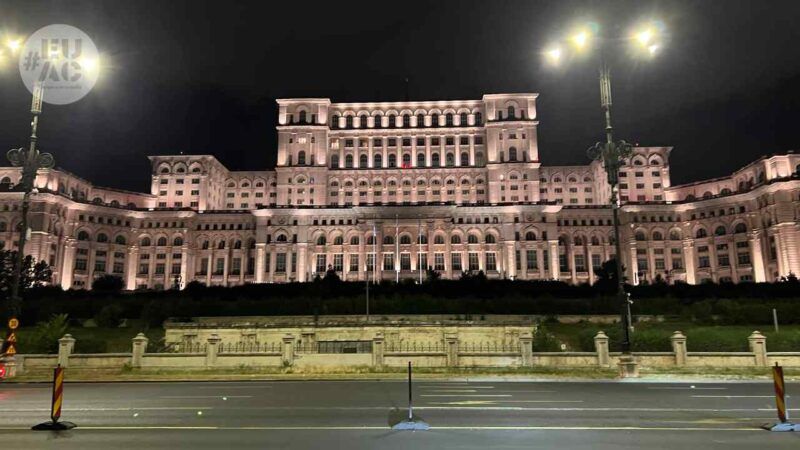
The Palace of Parliament is Bucharest’s most famous and controversial building. It was built in the 1980s by order of Nicolae Ceaușescu as a symbol of the communist regime’s power. With over 300,000 square meters, it is considered the largest administrative building in Europe and the second largest in the world after the Pentagon.
Its construction involved the demolition of much of the historic center and the relocation of thousands of families, making it a highly controversial project.
Today, the palace houses the Romanian Parliament, the Palace Museum, and the National Museum of Contemporary Art. Guided tours are available, showcasing its monumental halls decorated with marble, chandeliers, and giant carpets.
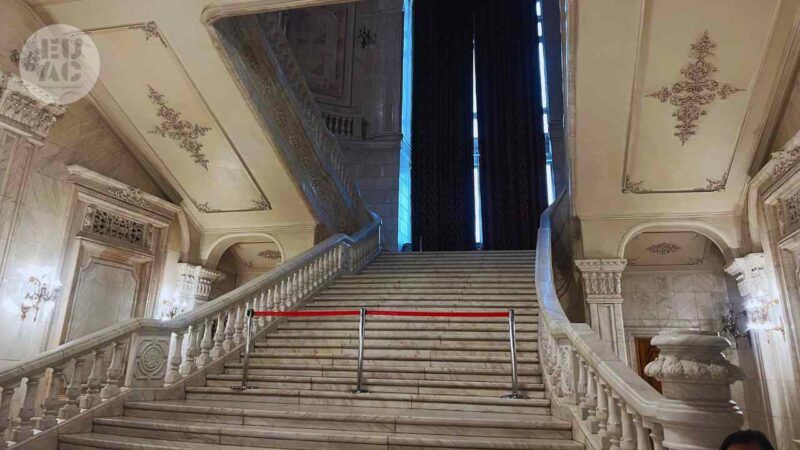
How to organize a visit to the Palace of Parliament
The entrance fee is 60 lei (about €12), and it’s important to bring a passport or ID to gain entry. Tickets can be purchased on-site, and admission is guided in the most common languages: Romanian and English (almost every day and at every time). Tours are also available in Spanish, French, German, and Italian, but with more limited schedules (not always available on the same day). Tours last one hour.
We booked in advance through Civitatis, and the tour is guided in Spanish. Things to keep in mind: in this case, the guided tour starts a few blocks from Parliament, so be sure to check the meeting location. Second, don’t forget to bring your passport to enter, otherwise you won’t be able to enter. Copies or photographs of your passport are not allowed. Finally, keep in mind that schedule changes can occur overnight or even on the same day without prior notice, as this is a government building. Be sure to check the phone number provided when you book.
Book a guided tour in Spanish of the Palace of Parliament in Bucharest
Within the same complex you will find the National Museum of Contemporary Art of Romania, but we did not visit it.
Cathedral of the Salvation of the Nation.
Behind the parliament stands the imposing Cathedral of the Salvation of the Nation. The Cathedral of the Salvation of the Nation is the largest Orthodox church in Romania and one of the largest in Europe. Construction began in 2010 to commemorate the centenary of the country’s unification, and it is scheduled to be consecrated in October 2025.
Unirii Boulevard and Unirii Plaza
We continue along Unirii Boulevard, a monumental avenue. Unirii Boulevard was built in the 1980s as a monumental axis leading to the Palace of Parliament. With its fountains and symmetrical architecture, it reflects the urban planning vision of the Ceaușescu era.
Piața Unirii is one of Bucharest’s most iconic squares, famous for its large central roundabout and fountains, which are illuminated at night with water shows and music. However, during our visit, we found them closed for renovations, so we were unable to enjoy the show.
Antim Monastery
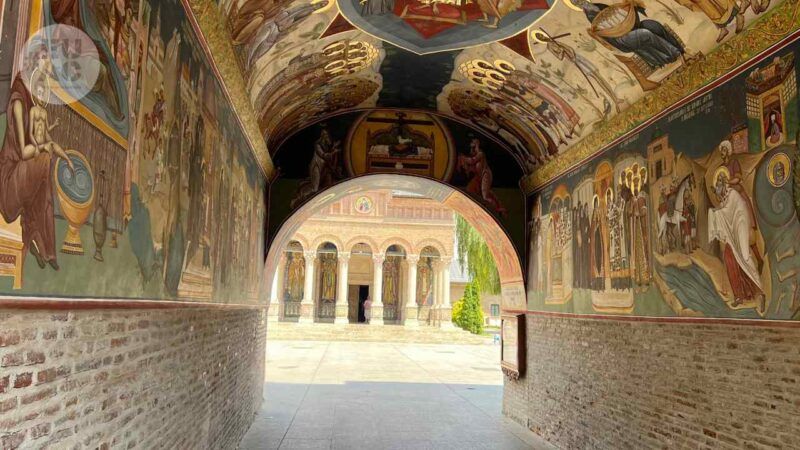
Now, let’s go to a monastery that I recommend you visit, the Antim Monastery.
The Antim Monastery was founded in the early 18th century by one of the most influential patriarchs of the Romanian Orthodox Church. Its architecture blends Brancovenesque elements with oriental details, giving it a unique feel within Bucharest.
Palace and Cathedral of the Patriarchate
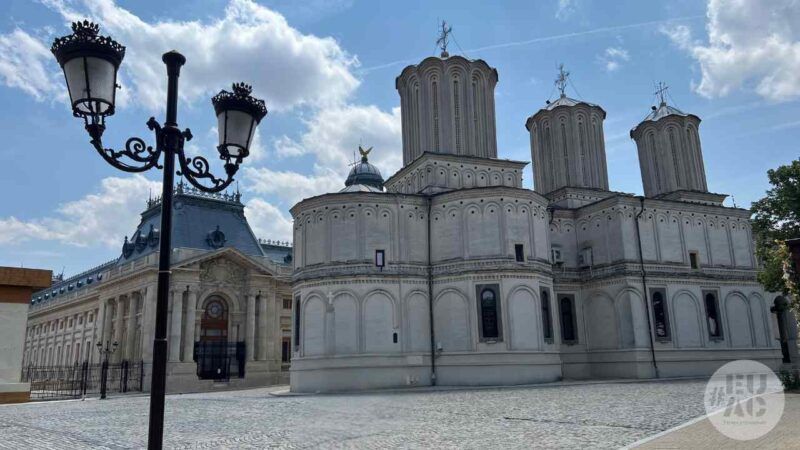
Visiting Patriarchal Hill is like discovering one of the most beautiful and spiritual corners of Bucharest. Here you’ll find the Patriarchal Cathedral, the heart of the Romanian Orthodox Church, with its frescoes and icons that convey centuries of religious tradition.
Next to it stands the Patriarchal Palace, a historic building that served as the seat of Parliament until the mid-20th century and now serves as the Church’s administrative center. Surrounded by tranquility and overlooking the city, the complex offers a unique setting for connecting with history and the Romanian Orthodox faith. Admission is free, but only the Cathedral is open to the public, as the Patriarchal Palace is closed to the public.
We head back to the hotel, but not before stopping for a drink and packing a bag to visit a place I thought I wouldn’t include among my must-sees, but after visiting it, I changed my mind and believe it’s one of the must-see attractions in Bucharest: the Bucharest Thermal Baths..
Bucharest Thermal Baths
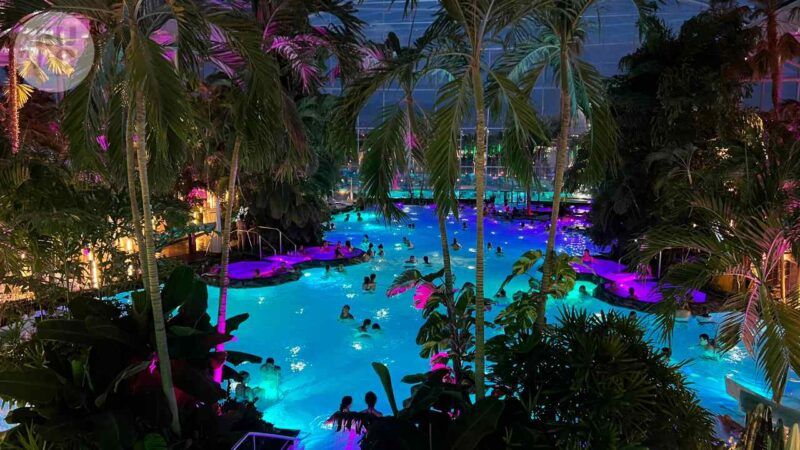
Therme București is Europe’s largest thermal wellness and entertainment center. Located about 20 kilometers from downtown Bucharest, a half-hour drive, it opened in 2016 as a modern relaxation and entertainment complex.
The place is divided into three main areas:
- The Palm, inspired by a tropical paradise, with thermal pools, swim-up bars, and thousands of exotic plants.
- Galaxy, designed for families and fun-seekers, with slides, water games, and pools for all ages.
- Elysium, the wellness area, with a wide variety of themed saunas, massage areas, and relaxing terraces.
Each space has its own unique atmosphere, and the best part is that you can easily move from one pavilion to another depending on the ticket you purchase. We had a really great time, both thanks to the facilities and the relaxed atmosphere that invites you to enjoy the whole day.
The complex is open daily from 10 a.m. until almost midnight, making it a great place to relax after exploring the city.
Entrance ticket to the Bucharest Baths
Prices vary depending on the option chosen. You can visit all three areas or choose one of them, and you can book a full-day or partial-hour ticket. We booked tickets for all three areas for four hours.
Tienes la opción también de hacer la visita a las Termas de Bucarest con transporte incluido
Day 3: What to see in Bucharest
The first thing we went to see was the Russian Church of St. Nicholas.
Russian Church of St. Nicholas
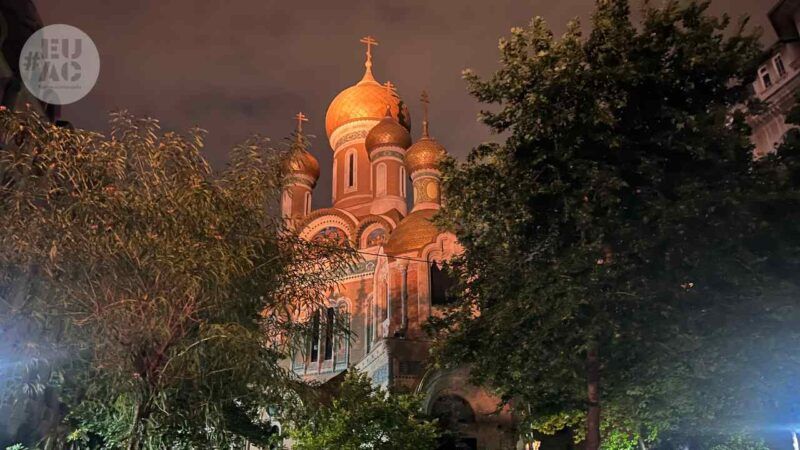
The Russian Church of St. Nicholas, also known as the Student Church, was built at the beginning of the 20th century with the support of Tsar Nicholas II of Russia. Its style is typically Russian Orthodox, with golden onion-shaped domes that contrast with the surrounding architecture.
Located next to the University of Bucharest, it has been a place of worship for students and professors for decades. Inside, it houses a richly decorated iconostasis and beautiful frescoes that directly evoke the Russian spiritual tradition.
Admission is free and it continues to operate as an Orthodox church.
Latin Passage and Plaza Roma
We continued walking and found the Latin Passage.
The Pasajul Latin is a small pedestrian passageway in the heart of Bucharest’s historic center. Although not as famous as others, it holds a curious detail: beneath its surface are preserved archaeological remains of the ancient city, including vestiges of medieval buildings. In fact, its name evokes the Latin heritage of the Romanian people, and walking through here is like treading on the oldest footprints in the capital.
Near the Latin Passage, we find the Capitoline Wolf, the famous sculpture of the she-wolf nursing Romulus and Remus. It was a gift from Italy to Romania at the beginning of the 20th century and symbolizes the Latin heritage that unites both peoples. Located in the Piața Roma, it is a very photogenic spot to recall Bucharest’s Roman roots.
We crossed to where the free tour left from the first day, and passed by the Colțea Church, dedicated to the Three Hierarchs, it was built at the beginning of the 18th century next to the first hospital in Bucharest, the Colțea Hospital, which still operates today.
We continued walking, until we reached Plaza San Jorge.
New Church of St. George
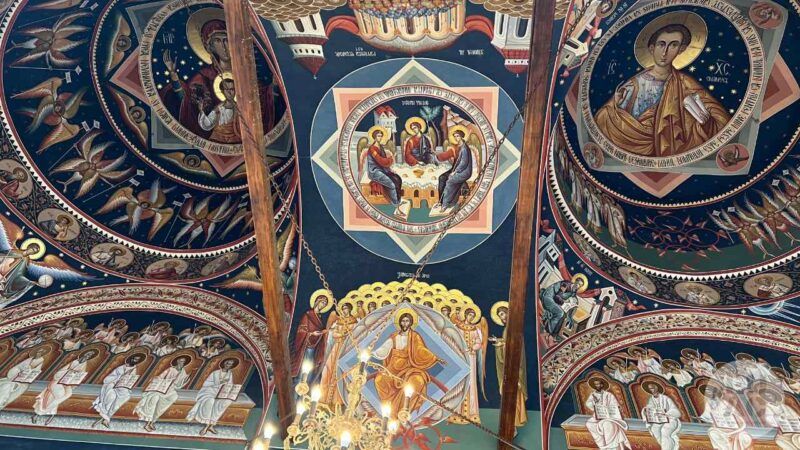
The New Church of St. George, located at the beginning of Calea Victoriei, was built by Prince Constantin Brâncoveanu in the 17th century. Built in the Brâncoveanu style, it houses his remains and is today an important place of Orthodox worship with free admission.
Coral Temple
The Choral Temple is the largest synagogue in Bucharest, inaugurated in 1867 and inspired by the Vienna Synagogue. Its Moorish Revival style, with arches and oriental decorations, makes it one of the city’s architectural gems. It remains an active place of worship for the Jewish community and is also open to visitors. Admission to the Choral Temple in Bucharest costs approximately 15 lei (about 3 euros) per person, and is payable only in cash upon entry.
Hanul Lui Manuc
Hanul lui Manuc is considered the oldest functioning inn in Bucharest.
It opened in 1808, and unlike other inns or guesthouses that disappeared over time, this one remained active with various uses: lodging, restaurant, performance venue, and even a space for political meetings and historical treatises.
Today, it still operates as a hotel and restaurant, giving it that “living history” charm. I recommend you step into this courtyard and see the building; it has that old-fashioned charm.
We are going now to Curtea Veche.
Curtea Veche and San Antonio Church
Almost opposite here is another place steeped in history: Curtea Veche, the Old Court of Bucharest.
It was the city’s first royal palace, built in the 15th century by Vlad Tepes.
Today the site is undergoing restoration, and we can see little of it, but it connects us with the medieval origins of Bucharest, right in the heart of the Old Town.
Next to the Old Court is St. Anthony’s Church, the oldest surviving church in Bucharest.
It was built in the 16th century and served as the city’s main church for centuries, where the rulers of Wallachia were crowned and blessed.
It is still in use today and is striking for its simple yet historic architecture, right in the heart of the Old Town.
Communist Era Museum
In Bucharest, we can also travel back to the communist era by visiting the Museum of Communism.
Located on Strada Șuțu, this space recreates a typical Romanian apartment from the 1970s and 1980s, with original furniture, appliances, toys, clothing, and propaganda posters.
The visit is like entering the home of a Romanian family from that era: every corner conveys what daily life was like under the communist regime, beyond politics, showing the reality of everyday life.
Ticket entrance to the Communist Museum in Bucharest
Church of Saint Demetrius
We’re heading to another church, St. Demetrius. St. Demetrius Church, one of the oldest in Bucharest, retains its traditional Orthodox style and a peaceful atmosphere in the heart of the Old Town.
You can add the Holocaust Memorial from here, after seeing it we went to a very particular cafe
Grand Café Van Gogh
After so much history, there’s nothing better than taking a break at the Grand Café Van Gogh, one of the most beautiful cafés in the Old Town.
With its colorful decor inspired by the painter and a very relaxed atmosphere, it’s the ideal place to relax and enjoy a coffee or a drink before continuing to explore Bucharest. Something different.
Nicolae Ceausescu’s House
And as the last stop on the tour, and for those who like history, we left something else to see in Bucharest: we went to Ceausesco’s House. This one is further away, and you’ll have to go by public transport. We went by car.
Ceaușescu House, known as the Spring Palace, is located in an elegant residential area of Bucharest.
Dictator Nicolae Ceaușescu lived here with his family for more than two decades, until the fall of the regime in 1989.
From the outside, it looks like an elegant villa, but upon entering, we discover a true palace. The guided tour takes us through halls decorated with marble, tapestries, and crystal chandeliers, a vast dining room, interior gardens, and even a mosaic-covered pool that is surprisingly luxurious.
Each room reflects the contrast between the privileged life of the Ceaușescu family and the difficult reality experienced by the rest of the country during communism.
The tour includes personal objects, official portraits, and private spaces preserved as they were when the family was overthrown.
Today, the Ceausescu House has been converted into a museum that offers a glimpse into this part of Romania’s recent history and a better understanding of how the regime operated from the intimacy of its leader. Ceausescu House Museum website
Arc de Triomphe
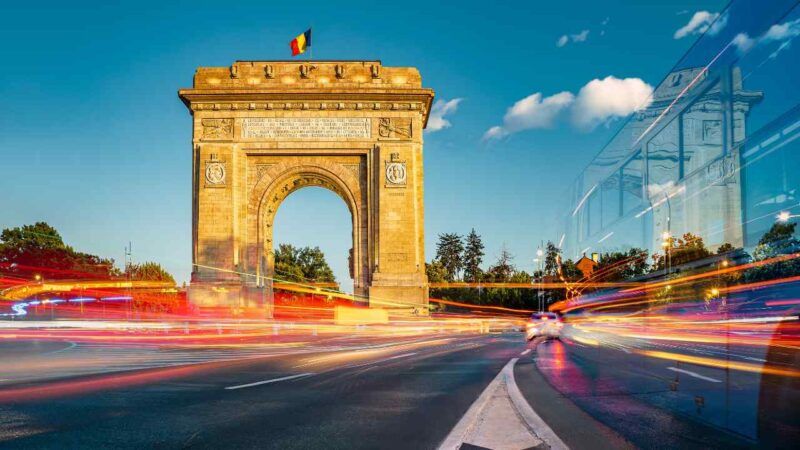
On the way back, we passed by the famous Arch of Triumph in Bucharest. Inspired by the one in Paris, the Arch of Triumph in Bucharest was erected in 1935 to commemorate Romania’s victory in World War I and the unification of the country.
Today, it is one of the capital’s greatest symbols.
You can add the Village Museum, the Sky Tower, or other sites that we didn’t have time to visit to this tour.
If you have an extra day, you could add a visit to Transylvania and its castles. There are excursions from Bucharest to the Transylvanian Castles. We dedicated a few nights to Transylvania, its towns, and castles, and we’ll leave them in a special post. Post: Route through Transylvania
Or the transfagarasan route, one of the most scenic in the world
Practical information and video on what to do in Bucharest
Where did we stay for this tour of what to see in Bucharest? Our choice was the Moxy Old Town hotel, perfectly located, allowing us to do everything on foot, except for the places we mentioned, like the Thermal Baths and Ceusescu’s House.
A conventional hotel with a very good breakfast. We really liked it. The only thing missing was a wardrobe, but everything else was excellent. It also has an ironing room, an exercise room, an elevator, and very good-sized rooms. There are cheaper and more expensive hotels, but I highly recommend this area of the historic center.
The parking we used was the one at Plaza de la Universidad, underground and cheaper than another one around the corner from the hotel.
Internet, we were connected with Holafly eSIMs as we already said.
Remember that travel insurance is a must. I’m leaving you two options we regularly use so you can check prices and see which one best suits your needs. We’re also offering discounts. One is IATI insurance, and the other is GO ASSISTANCE travel assistance.
Dinner! As we told you, we went to Caru Cu bere, an experience worth enjoying. In fact, we returned on the last night to say goodbye to the city.
The remaining night we had dinner at the Irish Pub. It was something lighter, some hamburgers, but they were very good.
Flights: From Madrid we flew with T-Mobile, but there are others like Ryanair and Wizzair. Skyscanner’s search engine is the best for comparing prices.
Are you planning to visit other countries, such as Poland? I recommend checking out our posts on Warsaw and Krakow.
NOTE: The information in this article is based on our own experience and is completely objective. This article contains affiliate links.

